Web design agency / Sydney / Australia / Global clients
Web design built around your customer.
A website should make your business easier to understand, so customers can choose their next step with confidence. AIIMS Group designs and develops custom WordPress, Next.js and Shopify websites while connecting the customer experience with the marketing that brings people there.
Strategy, UX, brand, content, development and search, working from the same brief.

The short answer
What should a web design agency deliver?
A useful website brings your brand, customer journey, content and technology together so people can understand your offer. Visitors can then find the right information and take the next step, while your team gains a practical platform to manage.
AIIMS Group combines custom UI/UX design with website development, including ecommerce, search planning, creative production and conversion measurement. Whether your business serves Sydney, Australia or international markets, the scope starts with what your customers and team need.
Recognisable at first glance
A clear identity, appropriate imagery and a focused message help people recognise your business before they explore the offer.
Clear at the decision point
Useful page structure and credible proof guide visitors towards an enquiry, booking, comparison or purchase when they are ready.
Connected behind the screen
A considered CMS connects with reliable integrations and useful measurement, while clear responsibilities support the site after launch.
Selected website work
Different businesses.
Distinct digital experiences.
A facilities manager needs different information from a couple choosing a wedding venue, so each website needs its own approach. Similarly, home owners and jewellery buyers bring distinct questions to the page. Explore how those decisions shape the work.
Enterprise / Singapore
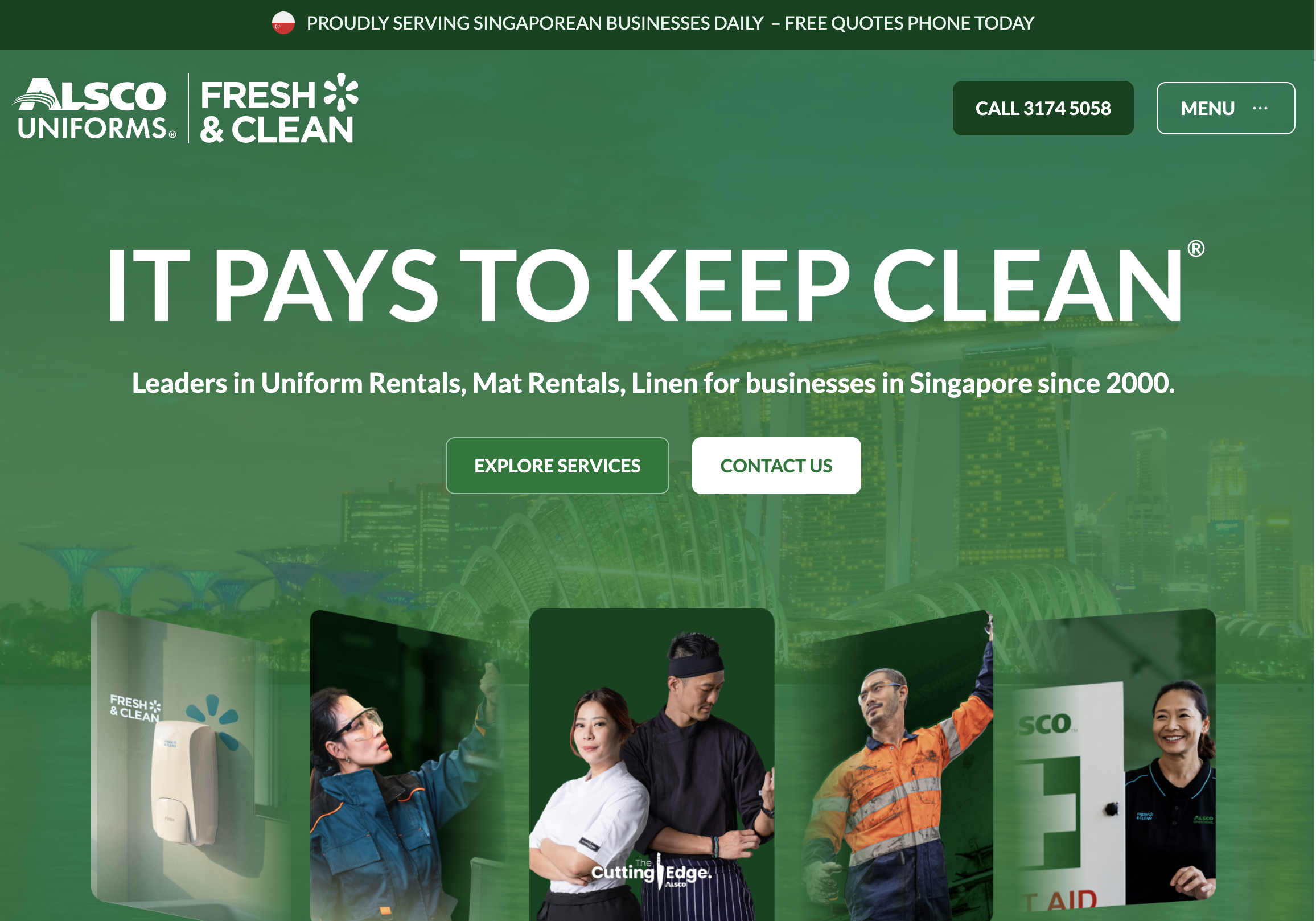
Alsco Uniforms
Alsco Uniforms brings its global brand guide into a clear Singapore customer experience. For example, service pages and industry content connect with the wider social identity and video rollout.
Fintech / Australia
LoanOptions.ai
LoanOptions.ai separates customer and broker journeys because each audience needs a different route through the platform. Brand, content and marketing infrastructure also support the custom digital experience.

Renewable energy / Australia
Solar Battery Group
Customers can explore solar battery options before moving towards a relevant enquiry. The website therefore connects product information with the questions people need to answer along the way.

Home services / Australia
Mr Grout
Mr Grout connects the customer’s search with a clear service offer and enquiry path. Its campaign page system also gives individual services a relevant destination within the custom website.

Hospitality and events / Sydney
Clarence House
Atmosphere and heritage shape the Clarence House website so couples can explore the venue with confidence. A consistent booking route then helps visitors arrange a viewing.

Ecommerce / Global
GemIQ
GemIQ presents specialist jewellery technology through product information for trade customers as well as online shoppers. Buying journeys therefore reflect the different questions each audience brings to the website.
Web Excellence Awards / 2026
Recognition attached
to real work.
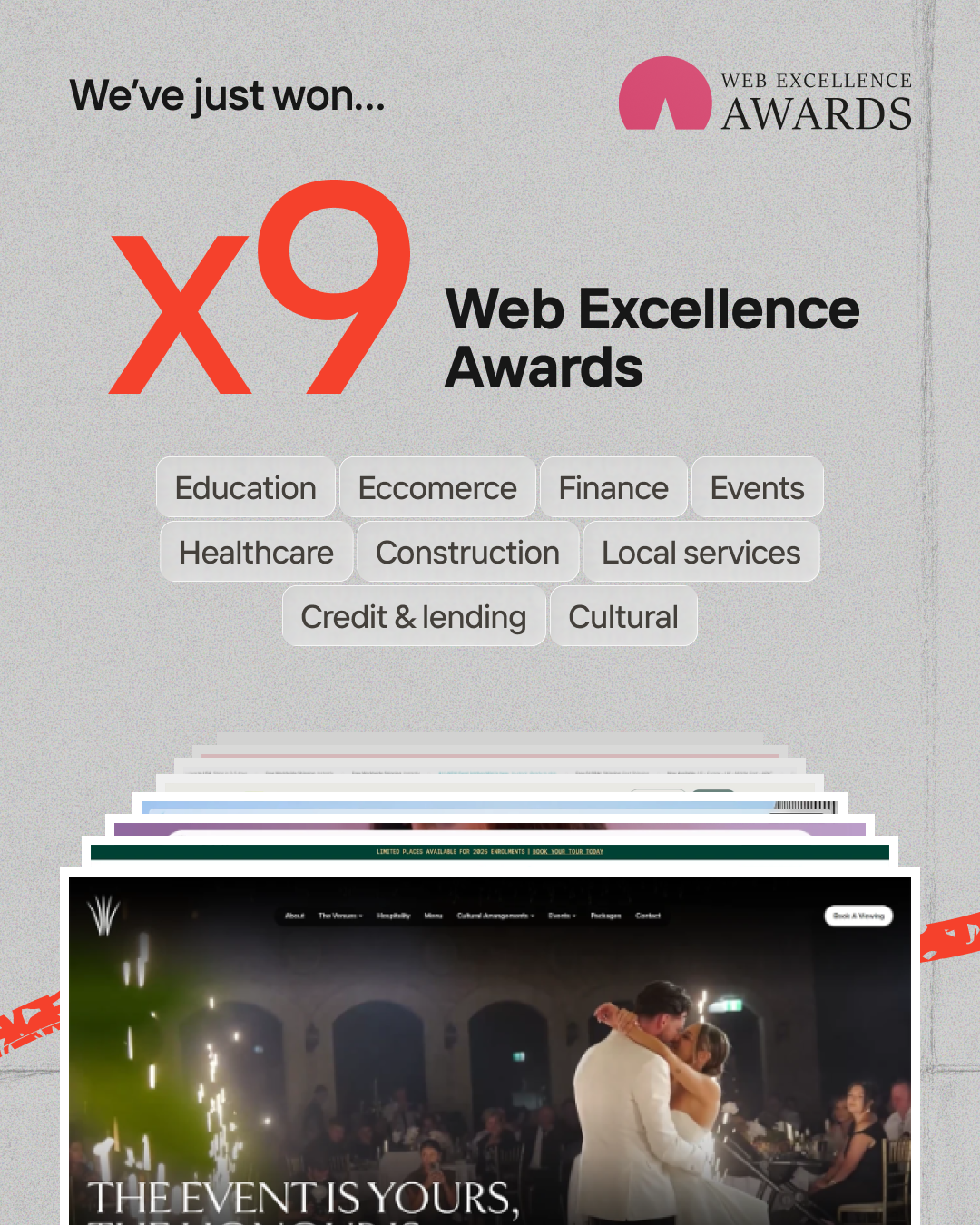
Nine new wins followed four earlier wins across two Web Excellence seasons. To see the work behind that recognition, explore the selected organiser records below. Then read the complete announcement and wider AIIMS awards archive.
Selected winners. Swipe or scroll horizontally to explore.
LoanOptions.ai
Fintech platform and customer experience, including distinct consumer and broker journeys.
View the official winner record ↗Solar Battery Group
Renewable energy website experience, including solar battery product information.
View the official winner record ↗Mr Grout
Service website and customer enquiry journey, including dedicated service destinations.
View the official winner record ↗Clarence House
Events and hospitality website experience, including venue discovery and viewing enquiries.
View the official winner record ↗GemIQ
Specialist ecommerce website experience for trade customers as well as online shoppers.
View the official winner record ↗Inside the design thinking
Every screen should
help someone decide.
Good UI/UX connects business communication with customer needs so each screen has a clear purpose. Navigation, page order, copy, imagery and interaction then work together to support the decision.
Our Alsco Uniforms UI/UX talk explains the reasoning behind the work, including the customer experience decisions. Watch the team discuss the approach, then explore the full website and brand rollout case study.
The video loads when you choose to play it. Alternatively, use the direct YouTube link.
Website design and development services
From the first sketch
to the working website.
A new website can support sales and brand building as well as publishing or business operations. The scope should therefore make those requirements clear and connect the right people to each part of the work.
UX research and information architecture
Start with customer and business needs so the website supports the right decisions. Then map the page structure, navigation, important journeys and content before moving into detailed design.
- Audience research, including stakeholder discovery
- Sitemaps, wireframes and key user journeys
- Prototypes before development of important interactions
Brand and custom website design
Translate the brand into a clear visual hierarchy so visitors can recognise the business and navigate with confidence. Typography, colour, imagery, spacing and reusable components then carry that identity across devices.
- Custom page and component design
- Mobile layouts and responsive behaviour
- Visual direction aligned to your brand
WordPress development
Build a content platform around how your team publishes as well as how your customers browse. For example, custom themes, page components and agreed integrations can support service businesses, editorial sites and corporate websites.
- Structured content, including services, locations and articles
- Editing workflows and reusable components
- Performance, forms and integration planning before launch
Shopify ecommerce design
Connect product discovery with useful information so shoppers can move through a clear buying journey. Custom Liquid theme development then brings the visual direction into a store your team can operate.
- Collection and product page experiences
- Catalogue planning, including search and merchandising requirements
- Checkout scope matched to platform features and plan
Next.js and custom development
When a platform needs custom functionality, connect interface design with the application, content and data requirements. Rendering, APIs and integration choices must also match the actual product brief.
- Customer portals as well as partner experiences
- API-connected websites and web applications
- Content architecture and rendering strategy
Website rebuilds and migrations
Assess what the existing site has earned before replacing it. Content, useful URLs, search visibility, analytics and customer journeys then inform a deliberate migration plan.
- Content audit and URL mapping before the move
- Redirect and tracking implementation
- Launch checks followed by post-launch monitoring
Campaign and service landing pages
Give each important campaign a relevant destination so the website follows through on the promise of the ad or search result. Match the message, offer, proof and enquiry action to that audience, including visitors from paid media and other channels.
- Relevant destinations, including products, services and campaigns
- Location pages based on genuine service coverage
- Conversion measurement and testing priorities
Content, production and integrations
Bring words, imagery and business systems into the brief before design decisions become fixed. Clear content and dependable follow-up then help the website do its commercial job.
- Website content, including copy, photography and video
- CRM, booking and lead-routing requirements
- Analytics, product feeds and agreed integrations
Choose around the brief
The platform should suit
the business behind it.
The right choice reflects how customers buy as well as how your team works and what the website must connect with. We assess those requirements before recommending the build approach.
| Platform or approach | Typical fit | What we resolve in discovery |
|---|---|---|
| WordPress | Service and corporate websites, especially when content publishing is a priority. | Publishing needs, content types, integrations, editing and maintenance. |
| Shopify | Product catalogues as well as day-to-day ecommerce operations. | Merchandising, catalogue complexity, fulfilment, app requirements and checkout scope. |
| Next.js | Custom applications when the brief calls for a more complex digital product. | Data, rendering, APIs, integration requirements and ongoing technical ownership. |
| Custom integrations | Existing business systems, including the data and workflows the website needs to connect with. | Data ownership, access, reliability, error handling and support responsibilities. |
Shopify checkout customisation depends on your store and plan, so we confirm the available features and extensions during scoping.
Search, content and performance
Build the foundations
before launch day.
Website architecture shapes how visitors and search engines find information, so SEO belongs in the planning stage. That includes page purpose, navigation, URLs and headings, as well as internal links and the content itself.
A rebuild also needs to account for the current site. Review relevant content, existing URLs and tracking before the move so the migration has clear ownership and a practical launch plan.
The same discipline also supports AI discovery: accurate business information, accessible content, meaningful product detail and evidence customers can inspect.
What the technical brief should cover
- Page purpose and hierarchy, including useful internal links.
- Indexing, canonical URLs and sitemap requirements.
- Relevant structured data that matches visible content.
- Responsive layouts as well as image handling and page performance.
- URL mapping and redirects when pages change.
- Forms, analytics and conversion tracking.
- Accessibility checks, including keyboard use, labels and contrast.
- Monitoring and ownership after launch.
A deliberate delivery process
Clear decisions.
At every stage.
You should know what needs approval while design and development move forward. We therefore structure the project around clear decisions, responsibilities and next steps.
-
01
Discovery
During discovery, agree the business objectives, audiences, important tasks, content requirements and integrations. Then establish the scope and the decisions that need to be made.
-
02
Architecture and content
Next, map the site and key journeys so each page has a clear role. Identify the copy, imagery and product information needed before detailed design begins.
-
03
Design and prototype
Develop the visual direction, including the important page layouts. Review responsive behaviour and interactions before committing them to development.
-
04
Development and integration
Build the approved experience, including content structures and agreed integrations. Meanwhile, bring content and technical work together as the site takes shape.
-
05
Quality assurance and launch
Before launch, review key devices, forms, links, tracking and migration requirements. Then resolve launch-critical issues and confirm the release arrangements.
-
06
Handover and improvement
Finally, agree access, documentation, training and ongoing responsibilities. Use evidence from the live website so future refinements respond to actual customer behaviour.
The people behind the pixels
Design, brand and development.
Connected from the start.
Your project draws on interface design, branding and development specialists, so the team reflects the requirements of your brief.
UI/UX designers
Customer journeys and interface design, including wireframes and prototypes.
12Branding officers
Brand identity as well as visual consistency and creative direction.
3Developers
The front end and content platform, together with application logic and integrations.
8A named designer. A published project.
Aung Pyae Sone Oo
Senior Product, UI/UX & Visual Designer, AIIMS Group, Dubai. Aung is credited for the Clarence House website direction, including its visual approach. Explore the case study to see how the venue’s brand and customer journey work together with the component system.
The website within the wider marketing system
Make the website work
with everything around it.
Your ads, search content, video and customer communications create expectations before someone reaches the site. The website should therefore carry that promise into a clear experience and a useful next step.
Through HALO Marketing, AIIMS connects strategy and creative with search, paid media, websites and customer infrastructure so they support shared commercial objectives. A focused website project can also connect to a broader programme as your requirements develop.
Connect the customer journey
- Paid media together with the landing pages behind the campaigns.
- Search intent, including the pages that answer customer questions.
- Video, imagery and the proof that supports the offer.
- Forms and CRM so enquiries reach the right team.
- Ecommerce as well as the systems supporting each order.
- Reporting and the next improvement decision.
Know the company. Explore the thinking.
The capability behind
your next website.
Before choosing a website partner, use these resources to review AIIMS and explore how the group approaches design, technology and growth.
Company credentials
Review the 2026/27 Global Corporate Statement before scoping a project, including the corporate entities, capabilities and operating model.
Read the company statementAbout AIIMS Group
Explore the people and culture behind the website team, as well as the wider AIIMS organisation.
Learn more about AIIMSAIIMS ChangeMakers
Explore practical thinking from the people doing the work, including designers, developers, strategists and producers.
Explore ChangeMakersAIIMS Intelligence
Explore research and case studies alongside operating knowledge, so digital decisions connect with the evidence behind them.
Explore the intelligence platformFrom documents to useful web pages
Read how approved product documents can become structured web content so customers can find and use the information more easily.
Read the content architecture guideEcommerce and AI discovery
Explore product information and feeds together with the search foundations supporting the next layer of commerce discovery.
Read the commerce updateBefore the project begins
Website design and
development FAQs.
Planning, platforms and project scope
Do you design custom websites?
Yes. We begin with the business, brand and customer requirements, then develop the page structure, visual direction and build approach. The scope also identifies the custom design work, reusable components and platform requirements.
Can you redesign our existing website?
Yes. Before agreeing what to retain, improve or replace, we assess the current content, platform, customer journeys and search requirements. The review also covers existing URLs, integrations and tracking.
Which platforms do you work with?
Our website work includes custom WordPress development and Shopify Liquid themes, as well as Next.js and bespoke integrations. The recommendation therefore depends on your content, ecommerce, application and operational requirements.
How much does a custom website cost?
Pricing reflects the scope, including pages, content, design, platform, integrations, migration and testing. The proposal should also identify ongoing platform, hosting, licence and support costs where they apply.
How long will the website take?
The schedule depends on scope as well as content readiness, integration complexity and approval stages. During scoping, we agree the delivery plan and confirm current availability.
Design, content and integrations
Will the website work on mobile?
Yes. Responsive layouts and important mobile journeys guide design as well as testing. Before launch, we review navigation, typography, forms, images and key interactions across the agreed devices and screen sizes.
Do you include SEO in a website rebuild?
Yes. We can plan SEO requirements during architecture, development and migration. The scope then defines the technical work, content changes, redirects, tracking and any ongoing search programme.
Can you create the website content and video?
Yes. The project can include copywriting, photography and video, as well as other creative production. The proposal then makes content responsibilities, approvals and production requirements clear.
Can the website connect with our CRM or booking system?
We assess integrations against your platform and workflow, including the available APIs and data requirements. Before implementation, we scope the connection, testing and ongoing responsibilities.
Launch, support and ownership
What happens after launch?
Before launch, we agree access, handover, training and ongoing support arrangements for the project. The relevant support scope also defines maintenance, updates, backups, monitoring and future development.
Who owns and manages the finished website?
The proposal identifies ownership and administrator access, together with hosting, third-party licences and ongoing responsibilities. These arrangements should be clear before the project begins and confirmed at handover.
Your next website
Give your business
a stronger place to grow.
Tell us what the website needs to do, including what is holding the current experience back and where the business is heading. We will then shape a clear brief around the customer, the brand and the systems behind it.