Shopify agentic commerce agency.
Build for the next buying journey.
Your products need to make sense wherever customers find them. As a Shopify agentic commerce agency, AIIMS Group connects catalogue quality, search visibility, supported shopping channels and measurement around the journey to purchase.
First, we establish what your store can support. Then, we improve the product information and customer experience behind it. The result is a practical readiness plan for Australian and international ecommerce businesses.
What is agentic commerce?
Agentic commerce uses AI systems to help customers discover, compare and move towards buying products. Depending on the channel and its eligibility rules, the purchase can continue on your store or through a supported checkout within that channel.
For a Shopify business, the practical work starts with the catalogue, channel connections, customer information and order records. In addition, your website still needs to give shoppers a clear and dependable experience.
Discovery, referral and checkout each need a plan.
An AI answer mentioning your business, a visit to your store and a completed order measure different things. Therefore, the implementation and reporting need to reflect the route the customer actually takes.
Help the right product be understood.
Clear titles, attributes, variants and policies explain what you sell. For example, a shopper comparing a dash cam needs the model, recording specification and compatibility to be easy to establish.
Shopify Catalog, search indexing and connected feeds can support discovery, subject to the relevant channel’s requirements.
Carry the answer through to the page.
A customer may follow a recommendation to your online store. Next, the landing page needs to confirm the product, price, availability, delivery and next step.
We review mobile usability and referral reporting so the visit has a useful destination and a measurable role.
Verify how the purchase completes.
Some channels offer Shopify-powered direct checkout for eligible stores and customers. However, product types, markets and checkout features can differ from your own storefront.
We verify that route before planning activation, including the order information and tracking it provides.
For Australian stores: prepare the catalogue and assess each channel against the markets you serve. As of this review, Shopify’s Google AI Mode and Gemini direct-checkout documentation specifies US-based stores selling to US customers; other shoppers may be sent to the merchant’s online store. Eligibility must be checked before implementation.
Read Shopify’s current Google channel requirements ↗Make the product information and purchase journey work together.
Our Shopify agentic commerce agency work connects commercial priorities with the people responsible for catalogue, content, technology and reporting. Each part has a defined purpose and an agreed scope.
Find the gaps that matter.
First, we review the store, catalogue, integrations and existing channel setup. That establishes which issues affect product understanding, customer confidence or the ability to measure results.
- Product and variant structure
- Channel access and store policies
- Purchase journey and reporting gaps
Give every product a consistent identity.
We improve titles, descriptions, attributes and variant relationships. In addition, we compare the catalogue with connected feeds so prices, availability and product details stay aligned.
- Valid product identifiers where applicable
- Useful specifications and compatibility details
- Feed diagnostics and product data mapping
Answer the questions behind the purchase.
Product comparisons, buying guides and clear category pages help customers evaluate the offer. For example, useful content can explain which model suits a particular application and what the buyer needs to install it.
- Technical SEO and internal linking
- Product comparisons and buying questions
- Structured data matching visible information
Match the setup to the customer journey.
We assess the channel’s store, product and market requirements. Then, implementation can cover agreed catalogue connections, supported settings and purchase checks.
- Discovery and checkout eligibility record
- Delivery, returns and payment considerations
- Review of essential checkout functionality
Make the offer easier to assess.
Clear photography, demonstrations and comparison content support confident buying decisions. As a result, the product page can answer practical questions before they become a reason to leave.
- Product demonstrations and feature explanations
- Consistent claims across content and feeds
- Creative planned for the channels in scope
Connect activity with a reliable record.
Finally, we define how visibility, referral visits and orders will be assessed. That gives the team a clear basis for comparing results and identifying missing data.
- Defined referral sources and event checks
- Shopify order and channel attribution review
- Reporting periods, limitations and next actions
What your audit should leave you with: a prioritised issue register, a channel eligibility record, recommendations for product and content improvements, and a measurement baseline. Implementation responsibilities and dependencies are agreed before work begins.
Visibility. Store visits. Recorded sales.
AIIMS’ Uniden case study, reported on 14 July 2026, brings together citation, referral and Agentic Storefront data. The figures use different sources and reporting windows, so they should be assessed separately.
July 2026 snapshot
2026 YTD dataset published 14 July
Reported 30-day dataset
Same reported 30-day dataset
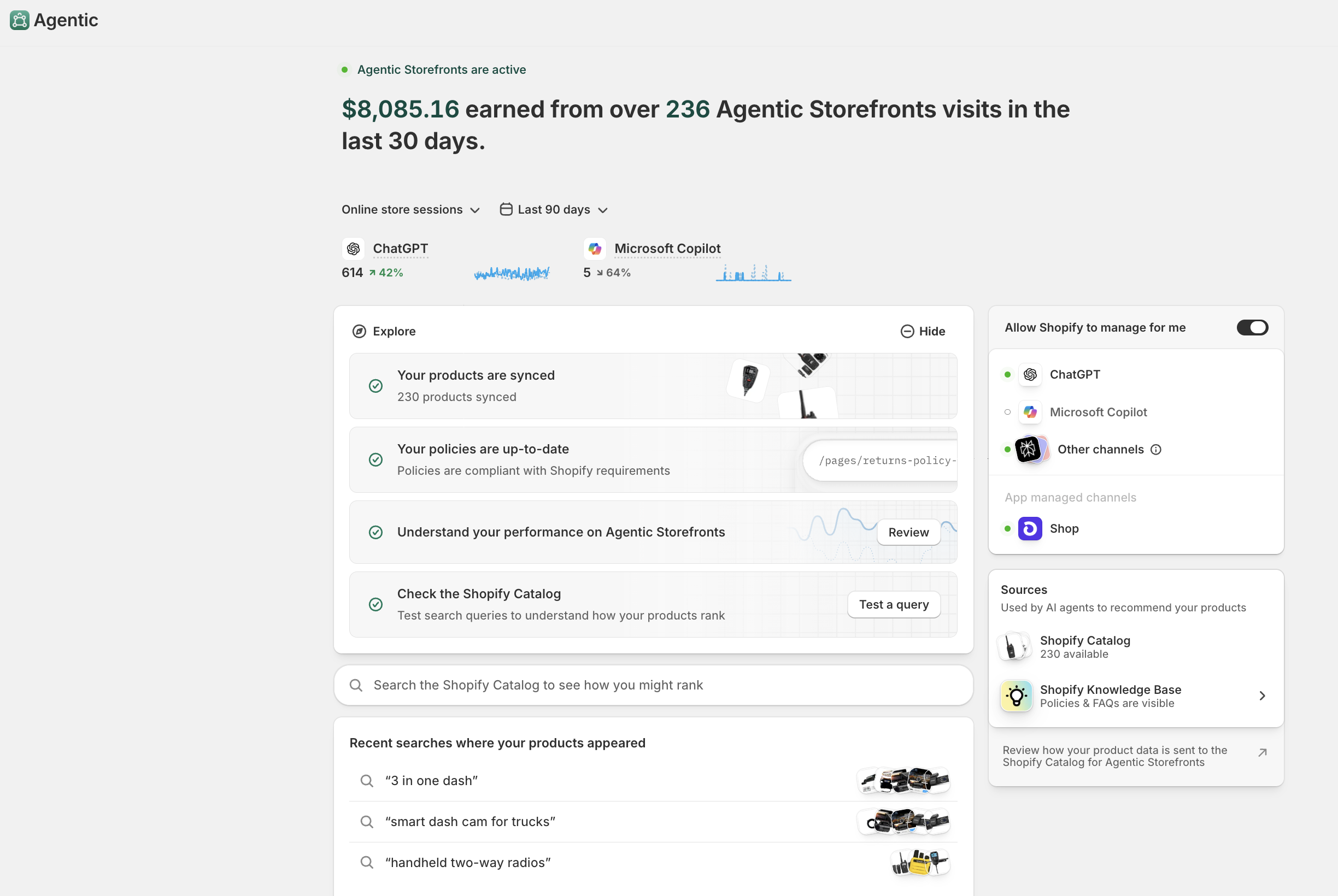
These are historical figures from the supplied case-study datasets. They do not establish which individual citation led to an order, or identify every channel’s checkout location.
Know what each number can tell you.
A useful scorecard starts with a defined source and reporting period. Therefore, we document how each measure is collected before using it to guide investment.
| Stage | Useful evidence | What to check |
|---|---|---|
| Product visibility | Recorded citations, sampled questions and product availability within supported channels. | Tool coverage, market, query wording and observation date. |
| Store referral | Identifiable visits and purchase activity recorded on the merchant’s store. | Referral source, consent, missing referrers and the attribution window. |
| Channel-attributed orders | Shopify order records and available channel or referrer attribution. | Order status, refunds, reporting currency and the specific purchase route. |
| Commercial contribution | Net sales, acquisition spend, product cost, fulfilment and repeat purchase where available. | Attribution overlap, margin and the completeness of cost data. |
Checkout location changes the tracking available. For example, Shopify states that Google Analytics and custom pixels do not fire within Google AI Mode and Gemini direct checkout. We therefore review Shopify order records alongside the supported tracking for the actual journey.
Read Shopify’s direct-checkout considerations ↗Build useful product information on a dependable website.
GEO and answer-led content should strengthen the customer’s understanding of your products. They work alongside technical SEO, accurate feeds and a usable storefront.
Google says its established SEO practices apply to AI Overviews and AI Mode. In particular, important information should be available as text, internal links should help discovery, and structured data should match the page.
Diagnose. Prioritise. Implement. Review.
-
Establish the baseline.
First, review the catalogue, markets, customer questions, supported channels and current evidence. Define what success means for the business.
-
Agree on the priorities.
Next, identify the changes with a clear commercial purpose. Record the scope, responsibilities and technical dependencies.
-
Implement and validate.
Then, complete the agreed data, content, feed and journey improvements. Check relevant product types and supported purchase routes.
-
Review the evidence.
Finally, assess results against the baseline and record what remains uncertain. Use those findings to choose the next changes.
People, capability and published proof.
AIIMS connects ecommerce, SEO, performance marketing, production and technology teams. In addition, the group’s published 2026 awards record provides context for the work and people behind delivery.
Web Excellence Awards
Client website recognition across two award seasons.
Explore the winning projects ↗Marquee Awards
GemIQ ecommerce and Gebal Group performance marketing campaigns.
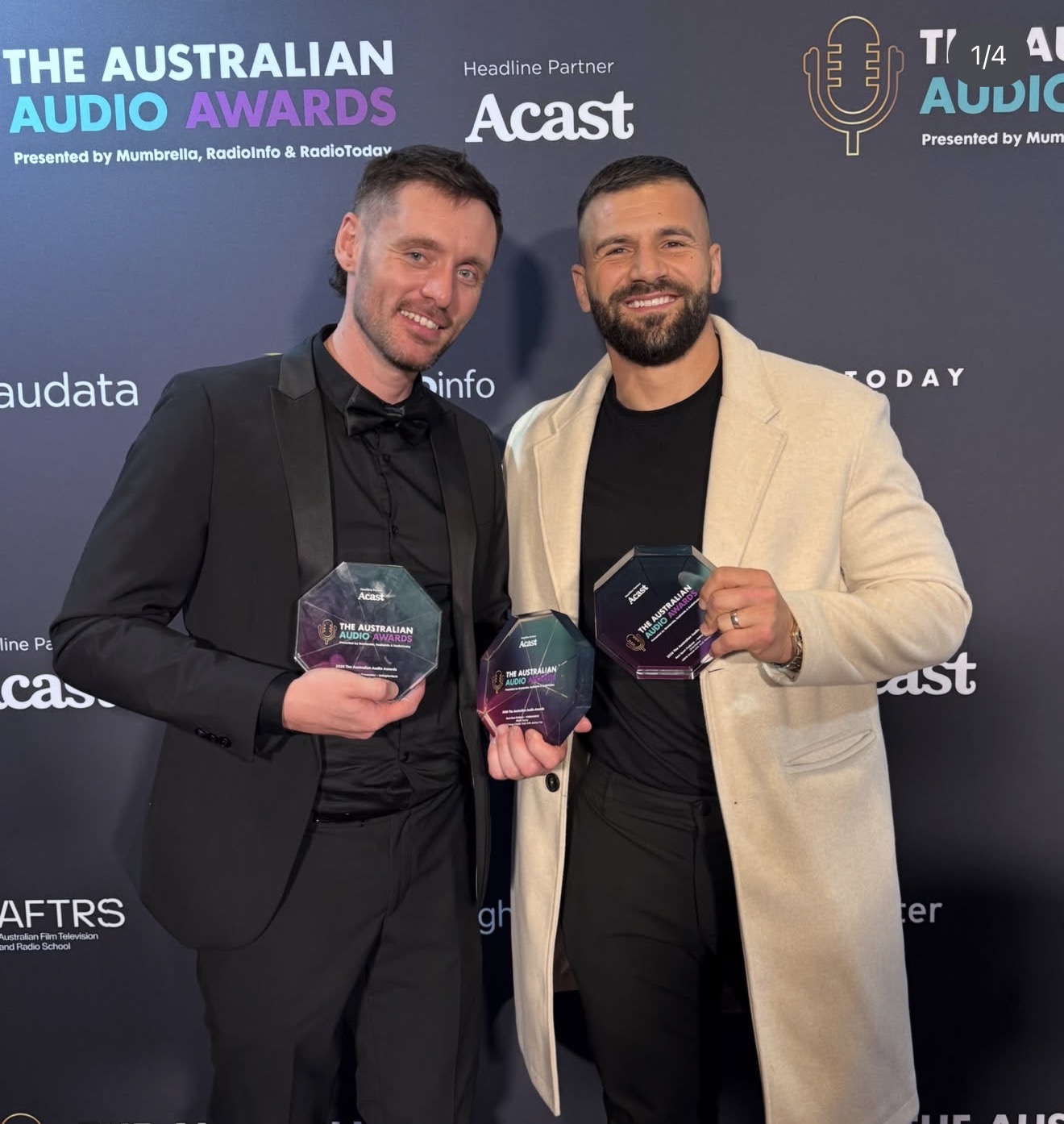
Explore the campaign record ↗Australian Audio Awards
Creator Hub recognition across host, sport and new podcast categories.
Explore the production awards ↗Bronze Stevie Award
Employer of the Year in Advertising, Marketing & Public Relations.
Explore the employer award ↗Follow the detail behind the decision.
Shopify agentic commerce explained
Explore the channel, product data and readiness considerations in our Shopify guide.
Read the agentic commerce guide ↗Shop campaigns and acquisition
Read AIIMS’ published observations of a Shopify campaign interface. Account observations should be checked against current eligibility and platform documentation.
Explore the campaign research ↗The broader ecommerce program
Connect readiness with store development, product content, advertising and customer retention.
Explore Shopify growth services ↗Shopify agentic commerce agency FAQs.
What does a Shopify agentic commerce agency do?
A Shopify agentic commerce agency reviews the product data, channel connections, content and measurement behind AI shopping journeys. It can then implement agreed improvements to help the store support relevant discovery and purchase routes.
Can an Australian Shopify business start preparing now?
Yes. Catalogue quality, useful content, policy clarity and reporting can be improved now. However, discovery and direct checkout have separate requirements, so channel availability must be checked against your store, products and target customers.
Does a product recommendation mean checkout happens inside the AI channel?
No. A customer may be directed to your online store to buy. Alternatively, an eligible channel may offer a supported direct checkout. We check the actual route and its requirements before planning implementation or interpreting its results.
Will our existing checkout apps work in every channel?
They may not. Some direct-checkout environments support different features from your online store. For example, essential custom fields, product options, delivery methods or bundles may need specific review before a channel is suitable.
Does agentic commerce replace SEO or paid advertising?
Agentic commerce can form part of the wider acquisition program. SEO, product feeds, advertising, creative and retention still have their own roles. Therefore, the plan should connect these activities around the customer and your commercial priorities.
Can AIIMS guarantee product recommendations or sales?
No. Third-party platforms control eligibility, visibility and features. AIIMS can improve the information and systems within the agreed scope, assess supported channels and measure the evidence available.
How do you measure agentic commerce performance?
We define visibility observations, identifiable referral visits and recorded orders separately. In addition, we document source coverage, reporting dates, attribution windows and missing tracking before comparing the figures.
Do we need to rebuild our Shopify store?
That depends on the starting point. Many improvements can be made to product data, feeds, content and tracking within an existing store. A broader development project is considered when the current structure prevents the required changes.
Make the next buying journey a practical part of your plan.
Tell us what you sell, where your customers are and what you want to understand. We will help define the catalogue, channel and measurement work your business needs.
Speak with AIIMS Group.
Australia, UAE and international enquiries.