Google Ads Is Changing in 2026: Mel Kocoski Explains the 4 Updates Advertisers Cannot Ignore
Google Ads Is Changing Again.
Four major platform changes are reshaping Search, Display, Performance Max and local lead generation. Mel Kocoski explains what is changing, what is at risk and what advertisers should do next.

Google Ads is entering another period of structural change. The platform is consolidating campaign types, expanding artificial intelligence across Search, moving local lead products into its core advertising environment and finally giving advertisers a clearer view of where Performance Max spends money.
None of these changes should be assessed in isolation. Together, they reveal Google’s broader direction: fewer standalone campaign products, more cross-channel automation and more reliance on first-party data, creative depth and accurate conversion signals.
For advertisers, the upside is scale. The danger is surrendering control before the account, website and measurement framework are ready.
Standard Display Campaigns Are Moving Into Demand Gen
Google Display Ads are not disappearing from the internet. The inventory remains. What is changing is the campaign framework used to buy it.
Google has given the Google Display Network a new home inside Demand Gen. A phased migration tool began rolling out in June 2026, allowing eligible advertisers to move existing Display campaigns while carrying over a limited period of performance history. Google has also stated that, later, new Display campaigns will only be created inside Demand Gen and remaining eligible campaigns may be migrated automatically.
Why Google is doing it
Demand Gen provides a broader creative and inventory system than the traditional Display campaign type. Depending on campaign settings and availability, advertisers can work across the Google Display Network, YouTube, Discover, Gmail and Maps from a more unified campaign environment.
This reflects the reality of modern media consumption. Prospects rarely remain on one channel. They may discover a brand in a video, revisit it through a visual placement and later search by name. Google wants its systems to optimise across that journey rather than treat each visual surface as a separate media product.
“Do not treat migration as an administrative button click. It changes the campaign’s operating environment. Audit bidding, audiences, exclusions, creative ratios and conversion goals before moving anything that is already producing profitable results.”
What advertisers gain
Demand Gen supports a more diverse creative mix, including responsive imagery, uploaded image ads, product feeds, carousel formats and video. It also introduces richer audience options and broader format reporting. For brands with strong visual assets, the move can create a more complete prospecting and remarketing system.
What advertisers may lose or need to rebuild
Not every setting maps perfectly. Certain bidding methods and campaign-level controls used in traditional Display may not be supported in the same way. Google also warns that migration cannot be reversed, ads may need to be approved again and spend on the day of migration requires close attention because the migrated campaign can begin with a fresh daily budget.
Before migrating a Display campaign
- Record the existing campaign structure, audiences, placements, exclusions, bids and 90-day results.
- Confirm which conversion actions the campaign is optimising toward.
- Prepare landscape, square, portrait and video assets rather than relying on one responsive image set.
- Review account-level content suitability and placement exclusions.
- Use the official migration tool where eligible instead of rebuilding a successful campaign from zero.
- Schedule the migration early in the day only if the budget-reset implications are understood and monitored.
AI Max Is Expanding What Search Campaigns Can Do
Search advertising was traditionally built around a simple discipline: select keywords, write ads, control landing pages and bid for relevant queries. AI Max does not abolish those fundamentals, but it changes how tightly the advertiser must define every connection.
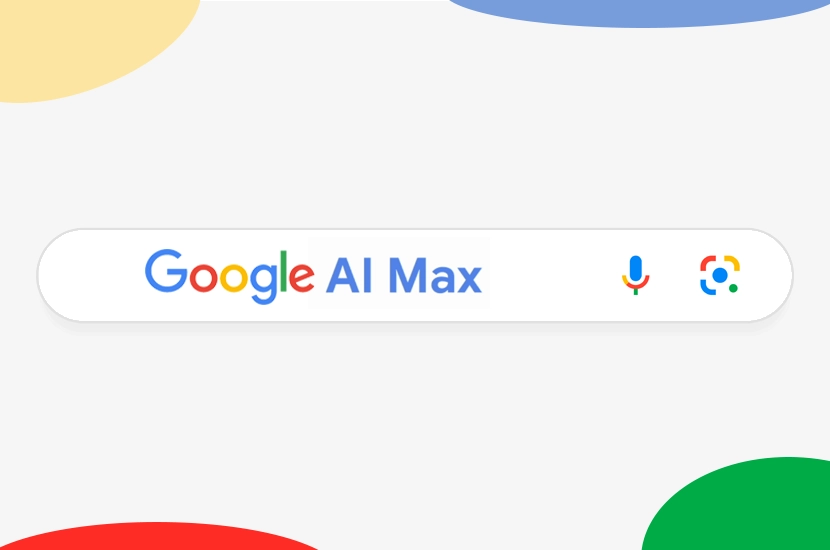
AI Max is a suite of targeting and creative features layered onto Search campaigns. Its two main components are search-term matching and asset optimisation.
Search-term matching
When enabled, AI Max can use broad match and keywordless technology to find queries beyond an advertiser’s existing keyword list. It learns from the campaign’s current keywords, ads and website URLs. Google also provides brand controls, locations-of-interest controls and additional reporting fields intended to explain why traffic matched.
Asset optimisation and final URL expansion
AI Max can customise text and send users to a page on the advertiser’s domain that Google predicts will perform better than the manually selected landing page. That may unlock incremental conversions, but it can also send traffic into pages that were never designed for paid acquisition.
“AI Max is not a licence to stop managing Search. It changes the manager’s job from manually controlling every query to controlling the quality of the system: the data, exclusions, website structure, brand boundaries and definition of a valuable conversion.”
The website is now part of the targeting system
When Google learns from URLs and can expand final landing pages, website architecture becomes a media-buying input. Thin service pages, outdated offers, weak location content or accidental indexable pages can affect both traffic quality and the message delivered to prospects.
This is why AI-led Search cannot be separated from website strategy. Advertisers need clear service-page hierarchies, accurate metadata, strong calls to action, fast mobile experiences and pages that match real commercial intent.
AI Max readiness checklist
- Separate primary revenue conversions from secondary engagement actions.
- Review brand inclusions, brand exclusions and negative keyword coverage.
- Audit every indexable commercial URL that Google may use.
- Confirm location settings and locations-of-interest controls.
- Check tracking templates and URL parameters before enabling final URL expansion.
- Monitor search terms, matched source, generated assets and landing-page performance after launch.
- Do not activate AI Max on a campaign already restricted by insufficient budget without resolving the underlying constraint.
Local Services Ads Are Transitioning Into Google Ads and Performance Max
This is potentially the most consequential update for Australian trades, home services and local lead-generation businesses.
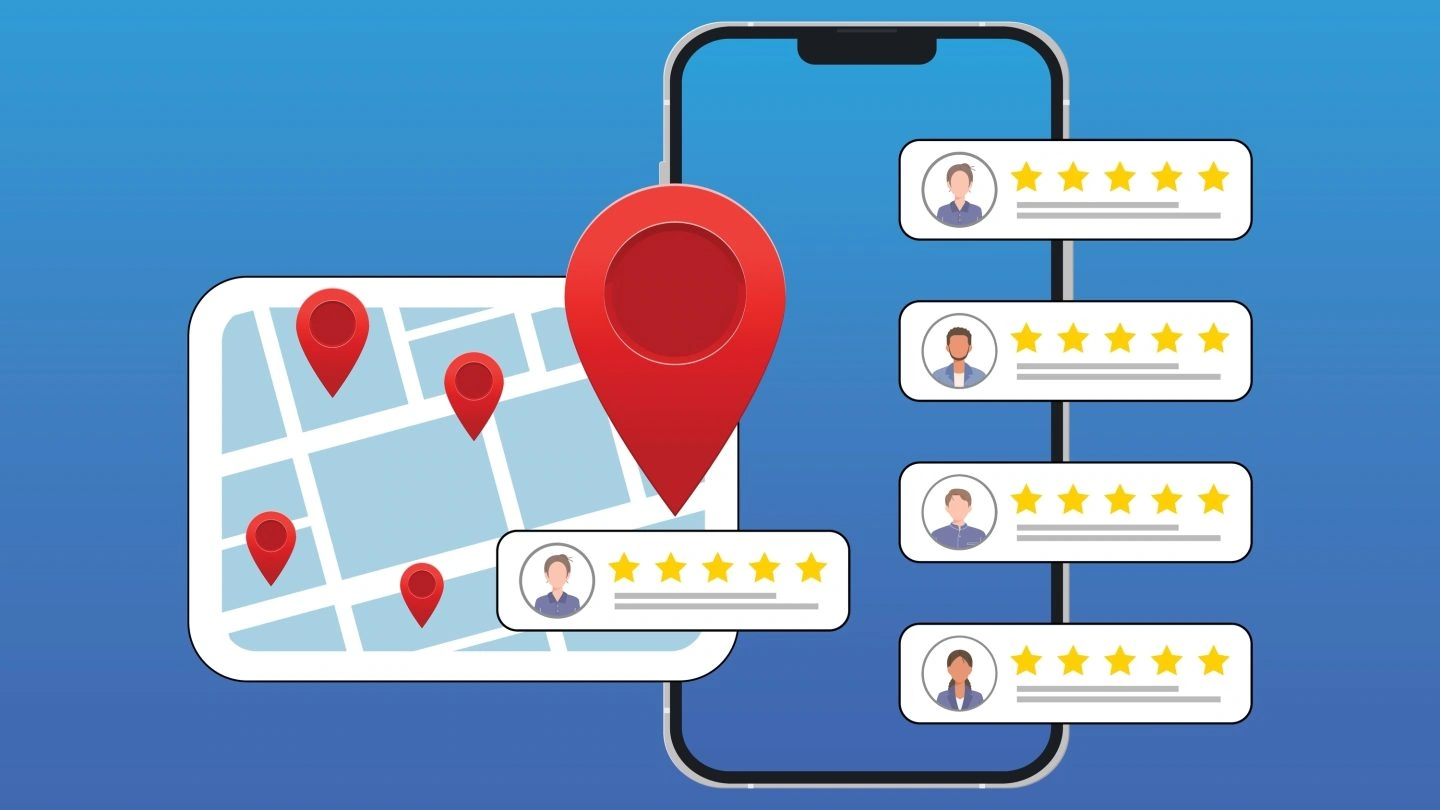
Google has announced a transition that brings Local Services Ads management into the Google Ads environment and Performance Max framework, while retaining the pay-per-lead model advertisers rely on. This is more than a dashboard redesign. It places local lead generation closer to Google’s wider automation, measurement and account-management systems.
Why this matters for plumbers, electricians, cleaners and home services
Local service advertisers often operate with limited lead capacity, tight service areas and large differences in job value. A blocked drain enquiry, emergency electrical fault and low-value quote request should not be treated as interchangeable conversions.
As management consolidates, businesses need a clearer connection between ad spend, phone handling, booking outcomes, serviceability and final revenue. The organisations that only count raw calls will feed Google a weaker commercial signal than businesses that can distinguish qualified leads, booked jobs and high-value completed work.
“Trades should use this transition as a reason to clean up the whole lead chain. Google can generate demand, but it cannot repair unanswered calls, slow follow-up, incorrect service areas or a team that fails to record which leads became jobs.”
The operational audit matters as much as the media audit
Before the transition reaches an account, advertisers should verify business details, licence and screening requirements, job categories, service locations, operating hours, call routing and review management. Lead disputes and lead-quality processes should also be documented.
Local service transition plan
- Confirm access to both Local Services and Google Ads using the correct administrative accounts.
- Document current job types, service areas, lead prices, booked-job rates and revenue by category.
- Audit phone-answer rates and missed-call recovery.
- Ensure reviews are recent, genuine and consistently generated.
- Remove service categories or suburbs the business cannot serve profitably.
- Connect CRM or offline conversion outcomes where technically and operationally possible.
- Brief reception, dispatch and sales teams before the dashboard changes—not after.
Google Finally Shows Where Performance Max Is Spending
Performance Max has been criticised for behaving like a black box. Advertisers could see total results but struggled to understand how much activity came from Search, Shopping, YouTube, Discover, Gmail, Maps or the Display Network.
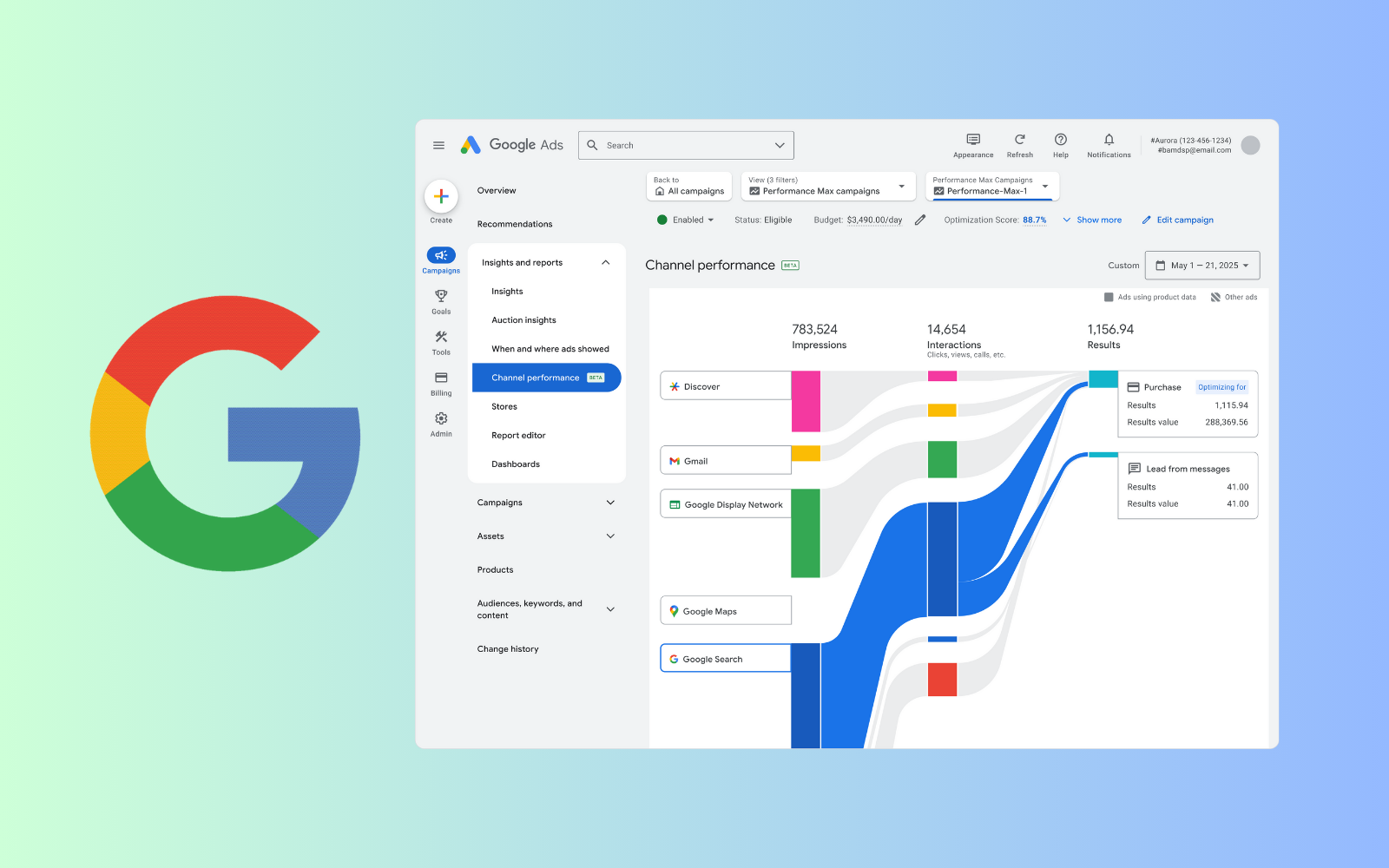
Google’s channel performance report is a meaningful step forward. It allows advertisers to review Performance Max results by eligible channel and inspect how channel contribution changes across campaigns and time periods.
What the report can tell you
The report can expose whether a campaign is being driven by high-intent Search or Shopping activity, or whether a significant share of reach and spend is being distributed through YouTube, Display and discovery-led placements. It can also help explain sudden changes in cost, conversion rate or conversion value.
What it still does not solve
Channel reporting does not automatically prove incrementality. A channel can appear efficient while capturing demand that already existed, including branded searches or remarketing activity. It also does not remove the need to inspect search terms, placements, asset groups, product feeds, new-customer acquisition settings and conversion quality.
“The channel breakdown is not a reason to micromanage PMax by demanding that every channel report the same return. It is a diagnostic tool. Use it to understand what changed, test whether the channel mix supports the business objective and identify where deeper investigation is needed.”
| Channel signal | Possible interpretation | Recommended investigation |
|---|---|---|
| Heavy Search contribution | The campaign may be capturing existing high-intent or branded demand. | Review brand traffic, search terms, exact-match Search overlap and incrementality. |
| Heavy Shopping contribution | Feed quality and product economics may be driving most value. | Review product-level margin, feed titles, availability, pricing and category segmentation. |
| Heavy YouTube or Display activity | The campaign may be prospecting or remarketing across visual inventory. | Review creative quality, view-through influence, placement suitability and assisted conversions. |
| Channel mix changes suddenly | Demand, budget, assets, bidding or account settings may have shifted. | Compare change history, budget constraints, conversion lag and asset updates. |
What advertisers should do now
Do not wait for an automatic migration or a performance decline to begin reviewing the account. Build a transition plan while the current structure and benchmarks are still available.
- Create a 90-day benchmark for spend, leads, sales, revenue, CPA and ROAS by campaign.
- Audit every primary and secondary conversion action.
- Document current Display settings before any Demand Gen migration.
- Review Search landing pages before enabling AI Max or final URL expansion.
- Open the Performance Max channel report and record the current channel mix.
- Separate branded demand from non-branded acquisition wherever reporting permits.
- Improve first-party audience data, CRM outcomes and offline conversion feedback.
- Build a deeper library of approved image and video assets.
- Review local lead handling, call answer rates and booked-job quality.
- Set a controlled testing calendar instead of activating every automated feature at once.
Learn More With Mel
Practical performance marketing commentary from Mel Kocoski and the AIIMS Group team. Watch the featured updates and subscribe for further platform analysis.
Learn more with Mel on AIIMS ChangeMakers
Subscribe for direct analysis of Google Ads, paid media and the changes shaping performance marketing in Australia.
Mel Kocoski
Mel Kocoski is a long-standing AIIMS ChangeMaker and a key contributor to the AIIMS Group Performance Marketing channel for Australia. Her work focuses on translating platform changes into practical account strategy—helping businesses understand not only what Google has launched, but what must change across campaign structure, creative, measurement and lead management.
Through AIIMS ChangeMakers, Mel contributes direct, useful commentary for advertisers navigating an increasingly automated media environment.
Frequently Asked Questions
Are Google Display campaigns being removed completely?
No. Google Display Network inventory remains available, but campaign creation and eligible campaign management are moving into Demand Gen. The operating framework is changing even though advertisers can still buy Display inventory.
Should every advertiser turn on AI Max immediately?
No. AI Max should be tested where conversion tracking, budgets, exclusions, website structure and landing pages are ready. Turning it on without those foundations can expand weak targeting or optimise toward low-value actions.
Will Local Services Ads still charge per lead?
Google’s transition guidance states that the pay-per-lead model will remain as Local Services Ads move into the unified Google Ads and Performance Max environment for eligible advertisers.
Does the Performance Max channel report provide full transparency?
It provides substantially better channel-level visibility, but it is not a complete explanation of incrementality, placement quality or profit. Advertisers still need campaign, asset, search-term, product and conversion-quality analysis.
What is the biggest risk in these Google Ads changes?
The biggest risk is giving automation poor inputs. Inaccurate conversions, weak creative, unsuitable landing pages and unqualified lead signals can be amplified across more inventory.
Primary platform sources
- Google Ads Help: Google Display Ads campaigns have a new home in Demand Gen
- Google Ads Help: How AI Max for Search campaigns works
- Google Ads Help: Local Services Ads transition to Performance Max
- Google Ads Help: Performance Max channel performance report
Platform features, eligibility and migration dates can change. Account-level recommendations should be based on the latest settings and notices visible inside the advertiser’s Google Ads account.
Want to discuss performance marketing with the AIIMS Group team?
Talk to a team that connects paid media, creative, landing pages, tracking and commercial outcomes—not just campaign settings.
Speak With the AIIMS Group Team