Meta Marketing Summit 2026: BFCM Playbook | AIIMS
AIIMS Intelligence · Field Notes
Creative is the new targeting.
Inside Meta’s 2026 peak-season playbook—and what Australian e-commerce brands must do now to win Black Friday and Cyber Monday before attention becomes expensive.
Figures above reflect insights presented at the Meta Marketing Summit, Peak Season Edition. Results vary by market, offer, account maturity and implementation.
Executive summary
The old peak-season playbook is finished.
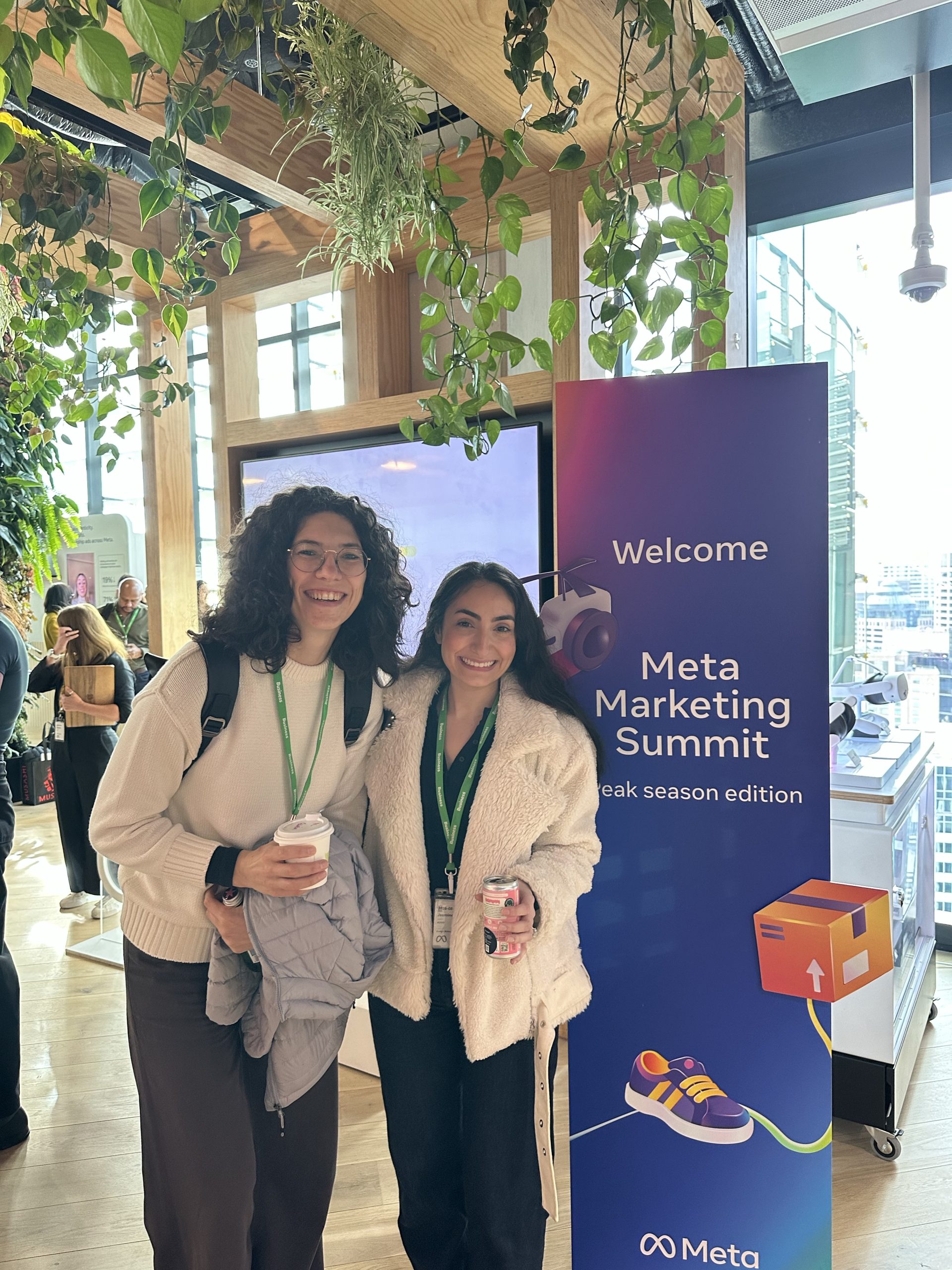
AIIMS Group performance marketing specialists Jasmine Jaafar and Claudia De Pizzol joined Meta’s Peak Season Marketing Summit in Sydney to examine the signals shaping Black Friday and Cyber Monday—BFCM—for 2026.
The commercial picture is positive: e-commerce spend is up 14% year on year, supported by a 7% increase in Meta ad spend. But a growing market does not guarantee an easy return. Competition rises early, audiences prepare before the sale window, and creative quality now carries more of the performance burden once assigned to narrow targeting.
The central lesson was direct: brands that wait for Black Friday to begin marketing have already surrendered the most valuable part of the customer journey. Winning plans build consideration early, use creator and short-form content to create familiarity, and give Meta’s machine learning enough clean data, varied creative and stable delivery time to work properly.
Build demand before it peaks
Fill the funnel from early October, create retargeting depth and become familiar before shoppers enter active buying mode.
Make the ad worth watching
Native short-form video, credible creators and a broad creative testing system now matter more than microscopic audience slicing.
Give AI better inputs
Advantage+ can improve scale, but only when tracking, catalog data, offers, pacing and creative variety are ready for peak demand.
Behind the scenes
From platform insight to client action.
Attendance is not the outcome. Application is. Jasmine and Claudia’s role is to bring the summit’s strongest signals back into AIIMS campaign planning—turning platform guidance into sharper creative briefs, better sequencing, cleaner measurement and more disciplined investment decisions.
“Creative is the new targeting.”
That line does not mean audience strategy is irrelevant. It means Meta’s delivery system increasingly needs creative variety to identify who responds, why they respond and which message should be served next. The work shifts from finding one perfect audience to building a system of useful hooks, formats, proof points and offers.
This approach sits at the centre of AIIMS Group’s social media marketing work in Sydney, where organic credibility, production and paid performance are treated as one connected growth system.
The 2026 roadmap
BFCM is a season, not a weekend.
For 2026, Black Friday falls on 27 November and Cyber Monday on 30 November. The practical campaign window begins well before either date. Meta’s peak-season guidance points to a six-week consideration build, with CPM pressure expected to intensify from early October.
The right sequence protects learning. Brands should resist the urge to rebuild campaigns every day once competition rises. Early testing finds the message. Longer delivery windows stabilise the system. Peak budgets then follow proven creative and genuine purchase intent—not last-minute optimism.
-
Open the funnel
Launch upper-funnel awareness, seed creator content and start building meaningful video-view, site-visitor and engagement pools before CPM pressure accelerates.
-
Prove the angles
Test hooks, offers, niche audiences and incrementality-focused bidding. Find the ideas that attract new customers—not only people who were already going to buy.
-
Stabilise delivery
Move into longer delivery and pacing windows, reduce disruptive account edits, check stock and confirm that catalog, checkout and conversion signals are clean.
-
Capture demand
Deploy the strongest budget allocation around Black Friday, then maintain a deliberate Cyber Monday plan—particularly for US-focused accounts.
-
Exit cleanly
Transition into evergreen, gifting, retention or clearance campaigns. Manage returns, inventory pressure and customer expectations instead of simply switching off.
Media and personalisation
Creative must do more than look good.
Adults now spend 40% of their video consumption time with short-form content, according to figures shared at the Summit. At the same time, 53% of consumers are more likely to purchase a product promoted by a creator. The implication is commercial: creator-led short video should be built into the media plan, not left as an organic extra.
For AIIMS, performance creative has four jobs: stop the scroll, make the product easy to understand, remove purchase doubt and give the platform enough variation to learn. This is the operational difference between one attractive video and a repeatable Meta Ads growth system.
Build native, vertical and immediate
Lead with the point. Design for sound-on and sound-off viewing. Use the correct aspect ratio for each placement and create multiple hooks rather than resizing one master asset into every channel.
Combine creator trust with paid scale
Partnership Ads bring creator authority into a brand-controlled media strategy. Secure usage rights early, choose creators for audience fit and build assets that can survive beyond one organic post.
Keep product truth in sync
Price, availability, imagery and promotional overlays must remain accurate during a volatile sales period. A disciplined feed—supported by tools such as Confect where suitable—protects relevance at scale.
Recover intent in the conversation
Where the market, customer consent and technical setup allow it, WhatsApp can support abandoned-cart recovery and direct catalog engagement with less friction than forcing every customer back through the original journey.
AI automation
1.75×Advantage+ can outperform manual setup—but it cannot repair weak foundations.
The Summit reported that Meta Advantage+ Shopping Campaigns can deliver up to a 1.75× higher conversion rate than manual campaign structures. That is a strong signal, not a guaranteed outcome. Automation works when brands supply the platform with a clear offer, trustworthy data, creative breadth and enough stable delivery time.
Performance figures are directional and account-dependent. “Up to” results should never be treated as a forecast for an individual advertiser.
Peak-season technical readiness
- Validate Meta Pixel and Conversions API event quality.
- Synchronise product titles, pricing, imagery, stock and variants.
- Test checkout, mobile speed, payment options and promotional codes.
- Prepare a creative matrix across hooks, formats, creators and offers.
- Set budget, pacing and escalation rules before the final two weeks.
- Keep the offer simple enough to understand in one viewing.
- Build a post-Cyber Monday transition for retention and evergreen sales.
For Shopify brands, campaign automation and storefront readiness must be planned together. AIIMS Group’s Shopify e-commerce growth services connect acquisition, feed quality, conversion optimisation and retention, while our performance marketing for e-commerce framework gives media decisions a wider commercial context.
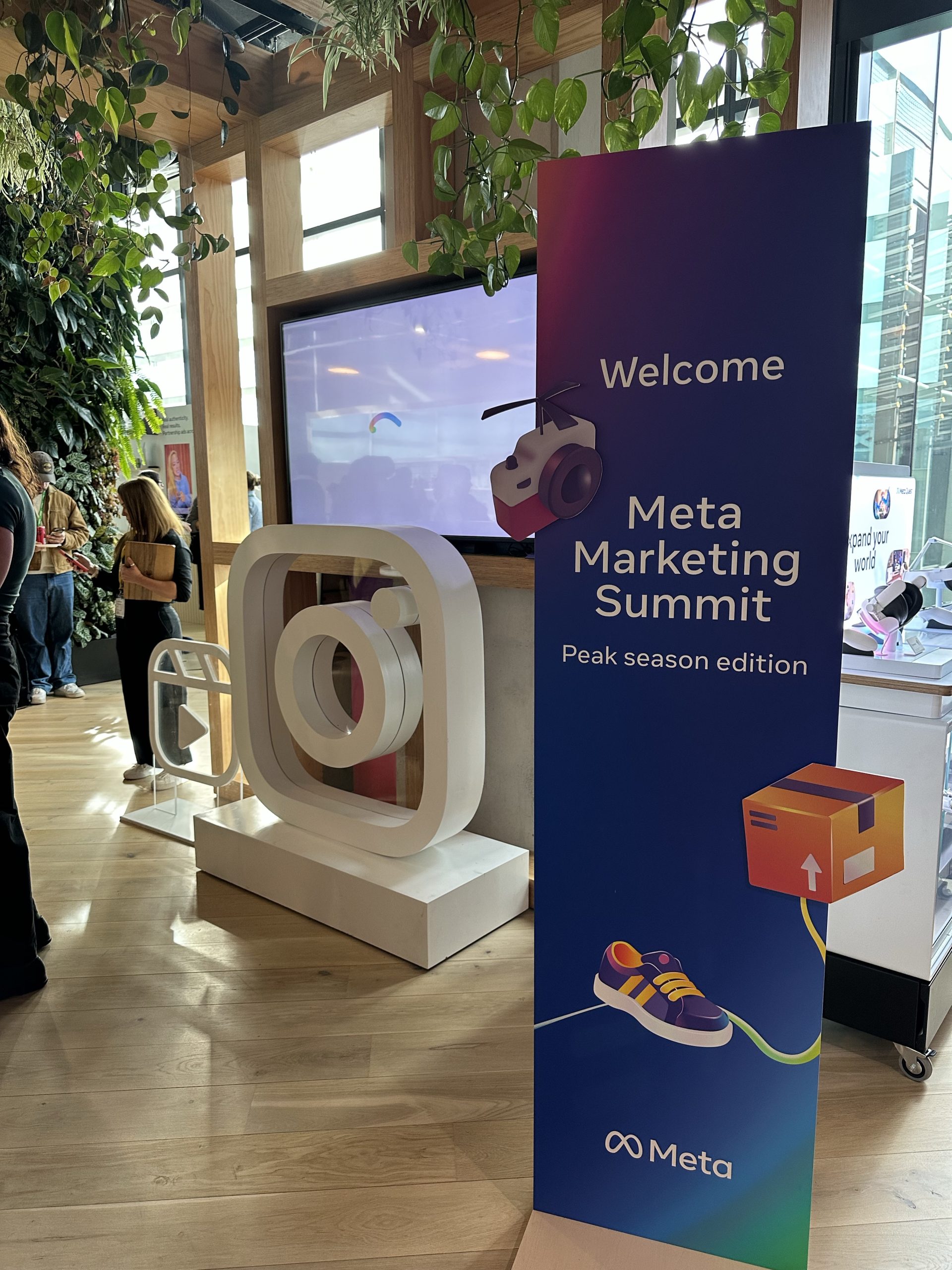
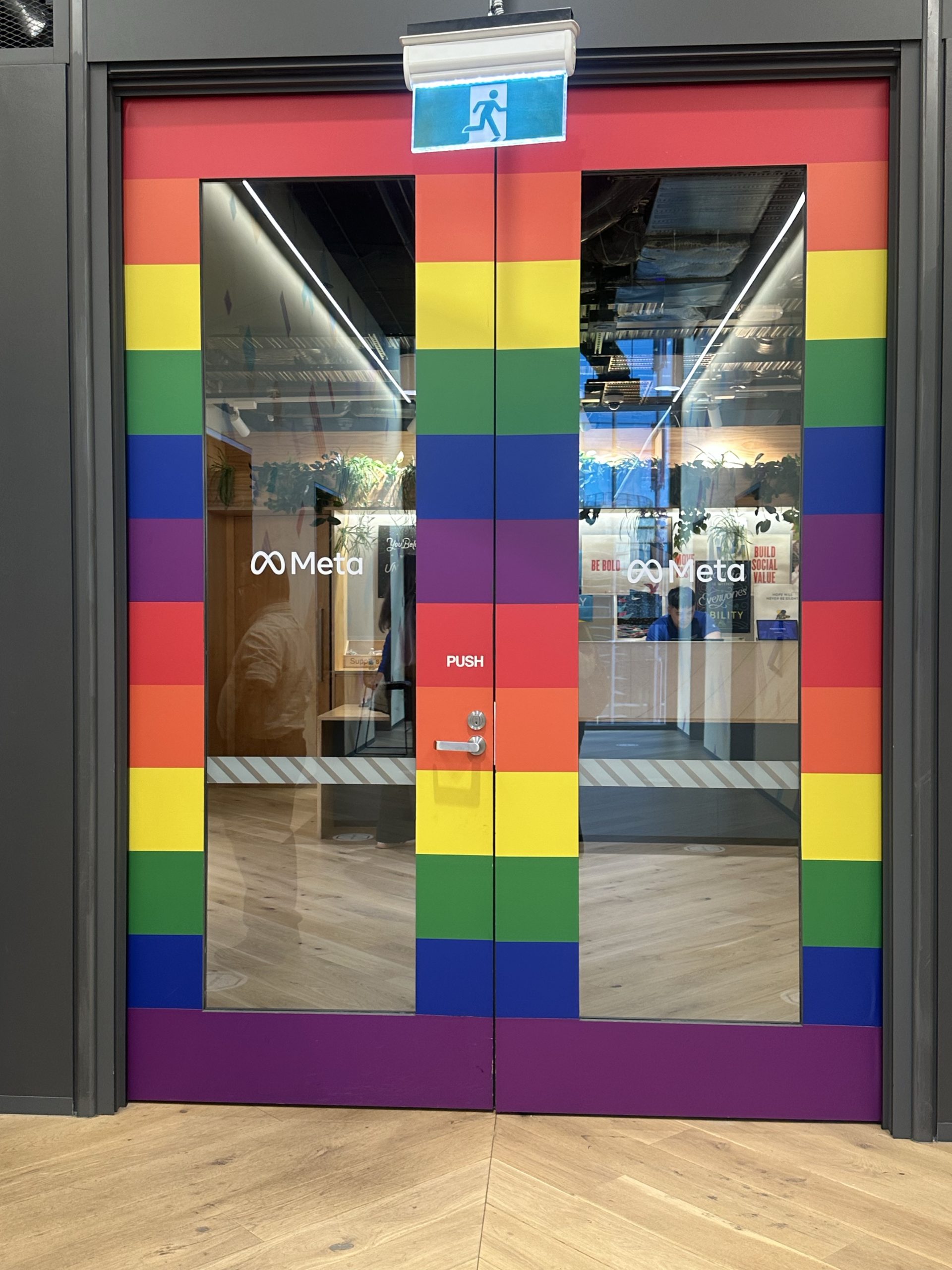
Inside Meta Sydney
The room where peak season was mapped.
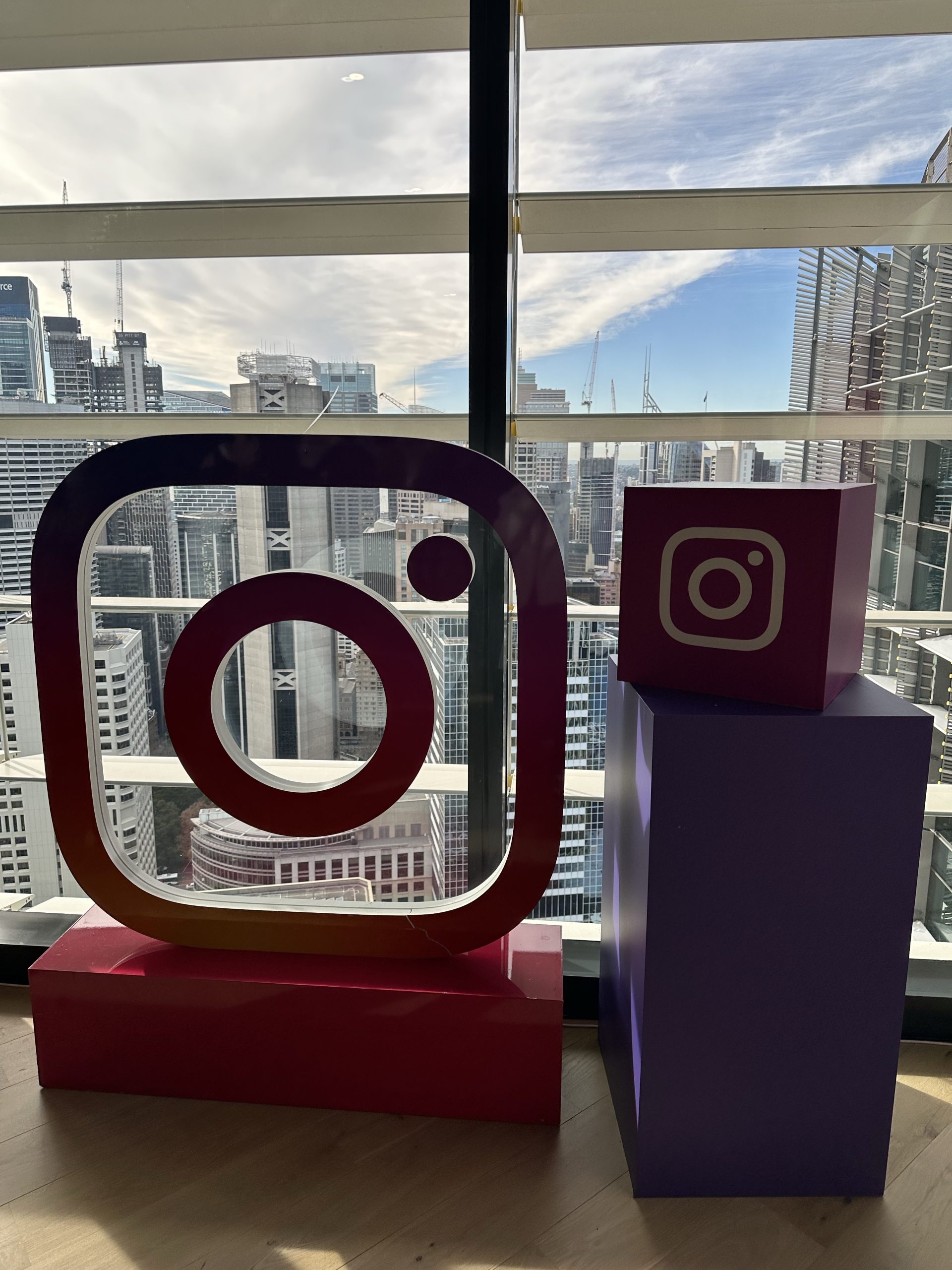
The Peak Season Edition brought performance teams into Meta’s Sydney office to focus on the period when the gap between prepared brands and reactive brands becomes most visible.
For AIIMS clients, the value is not the setting. It is earlier access to the thinking shaping delivery, creative and commerce—then translating that thinking into practical work before the market becomes crowded.
The AIIMS response
What e-commerce leaders should do next.
A strong BFCM plan is not a bigger budget attached to the same campaign. It is a controlled operating system that connects the offer, the creative, the store, the feed, the data and the post-sale customer experience.
AIIMS Group’s performance marketing team turns that system into a working plan: commercial targets first, platform mechanics second, and creative production connected to measurable demand.
Set the commercial guardrails
Agree stock priorities, margin thresholds, acquisition targets and the total peak-season budget before platform pressure begins.
Commission creative early
Brief creators, secure usage rights and build enough vertical video, product proof and offer variation to test without exhausting the audience.
Build the consideration pool
Use early October to earn attention and familiarity while costs are more manageable. Retargeting performs better when the audience is not assembled overnight.
Clean the commerce layer
Resolve catalog errors, tracking gaps, checkout friction and inconsistent promotional messaging before increased traffic exposes them at scale.
Stabilise before peak
Move from experimentation into controlled delivery two weeks out. Protect useful learning and avoid unnecessary structural changes.
Plan the exit now
Decide how the business will transition into gifting, evergreen, retention or clearance activity—and how returns and inventory will be managed.
Frequently asked questions
BFCM Meta Ads, answered.
The short answers for brands planning paid social, creative and commerce activity around Black Friday and Cyber Monday 2026.