
AIIMS Group presents · Saweet Way
Saweet Way case study. Launching Australia’s first allulose brand loudly..
A category Australians barely knew. A supermarket shelf already fighting for attention. AIIMS Group turned the technical story into a colourful brand, motion system and discovery engine built to be seen, understood and remembered.
AIIMS black gives the work its frame. Saweet Way orange, pink, blue and yellow give it the flavour. One agency system; one unmistakable brand world.
Featured motion · Three launch ReelsMuted preview · Select to watch with sound
Swipe the films on mobileAIIMS × Saweet Way
TL;DR
AIIMS transformed a newly permitted ingredient into a first-to-market Australian consumer brand with the creative and discovery infrastructure to compete from supermarket shelf to AI search.
Australians did not yet understand allulose, and unfamiliar products lose in seconds.
Lead with appetite, colour and everyday use. Place the technical proof behind the human reason to care.
Identity, packaging, graphic art, recipe Reels, creator collaboration, performance and AI-readable content.
First-to-market positioning, three clear formats and independently documented Woolworths availability.
The creative premiere · Brand work first
This is what category confidence looks like.
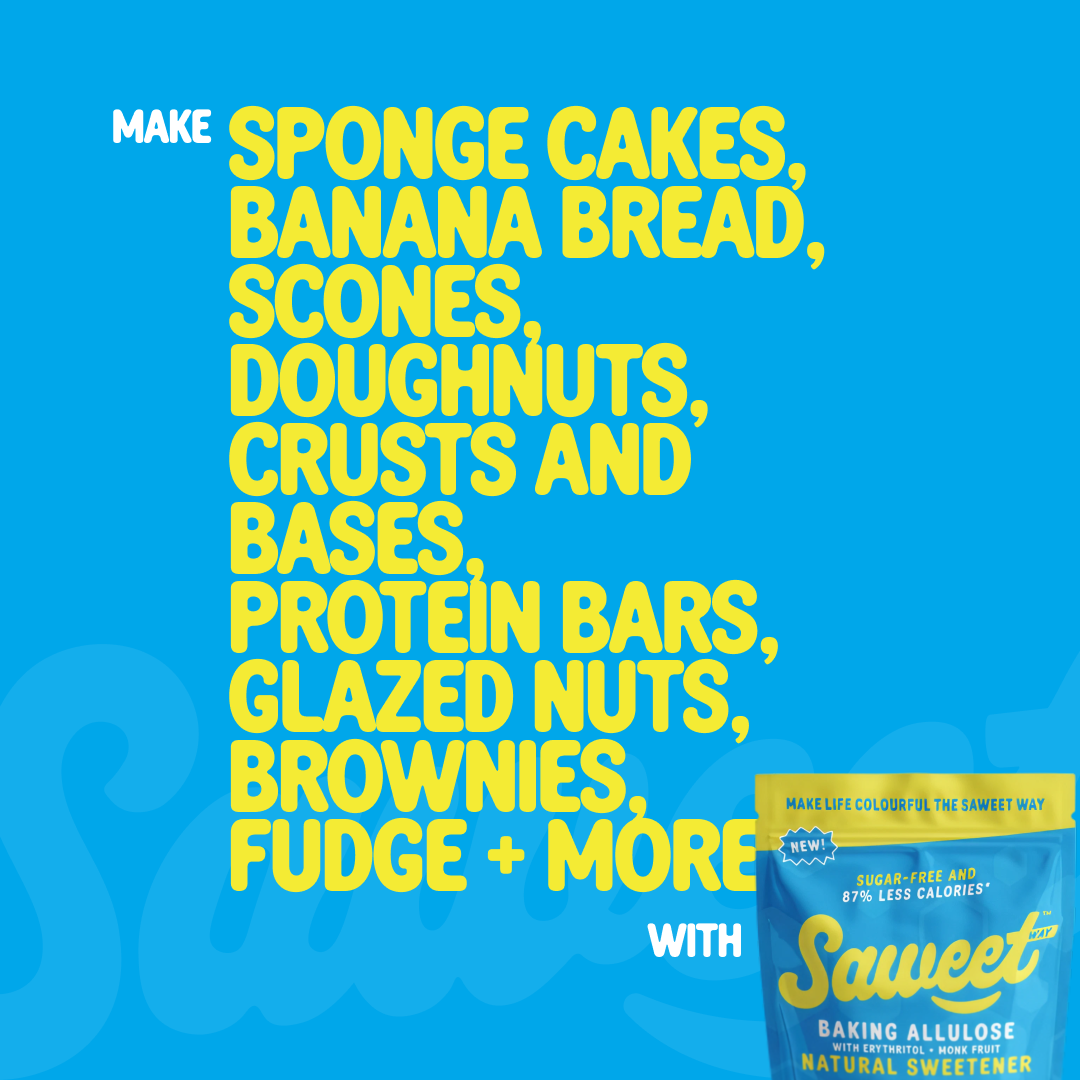
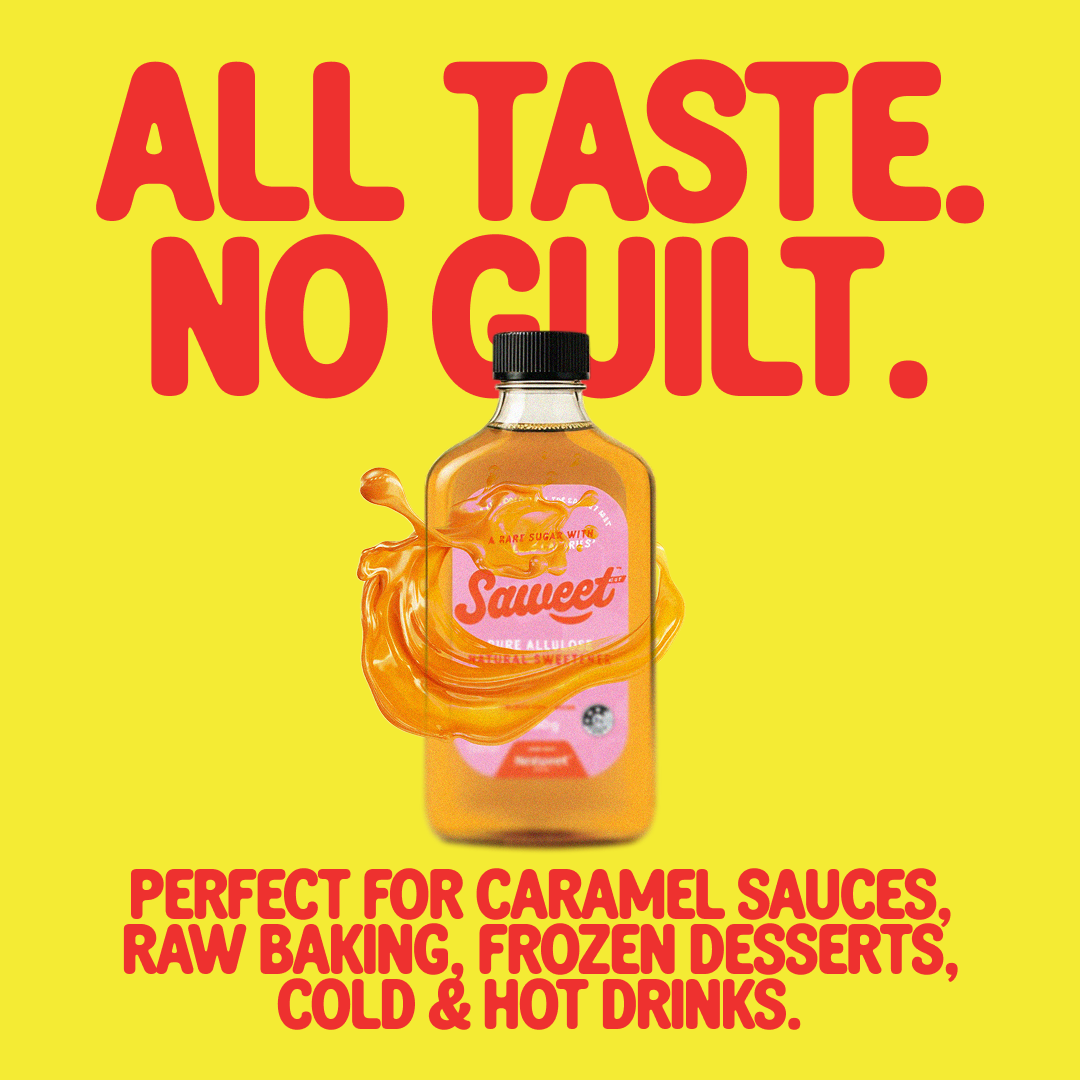
Not a safe “health product” template. AIIMS built a visual system with enough character to interrupt the shelf, enough discipline to hold a product family together and enough flexibility to keep social content fresh.
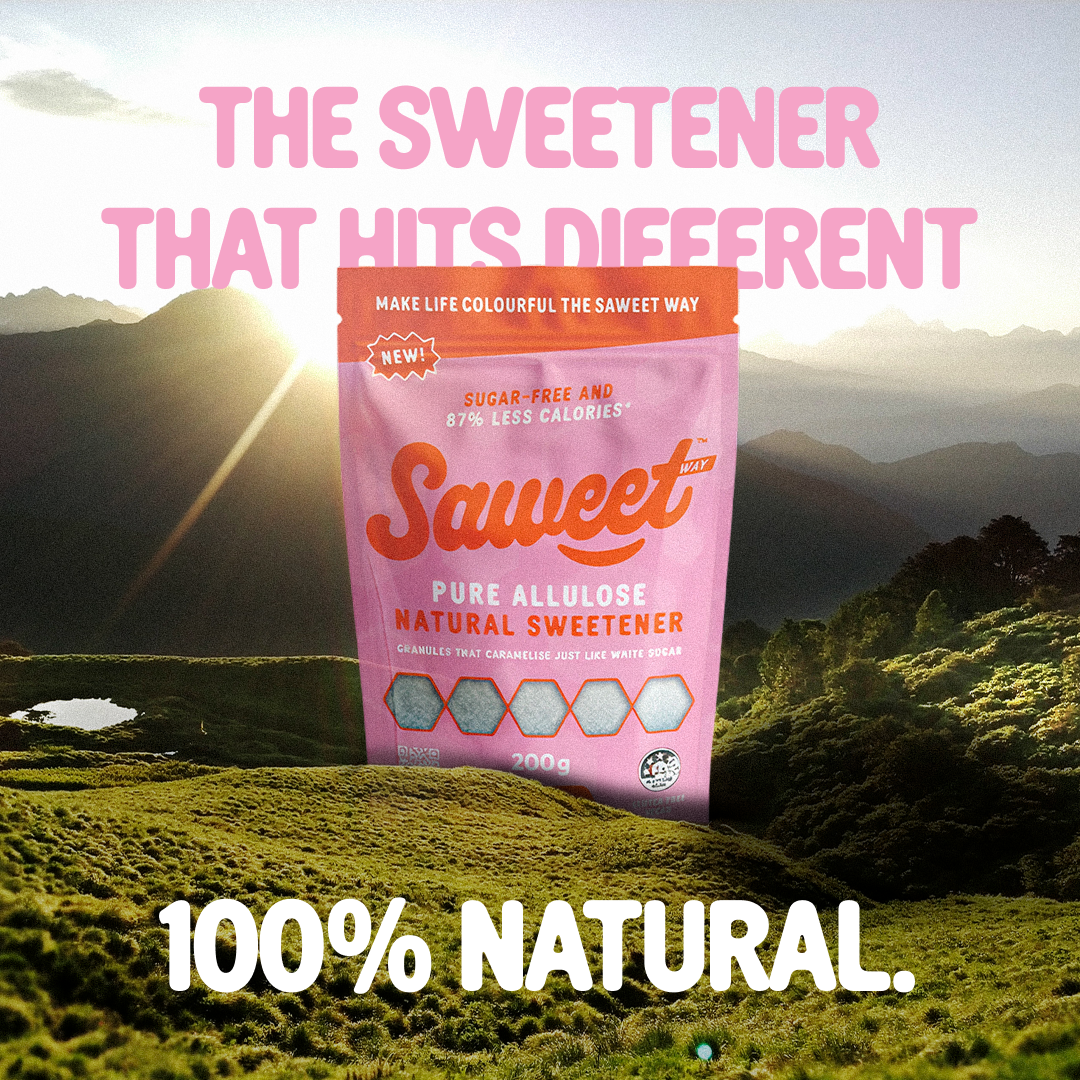
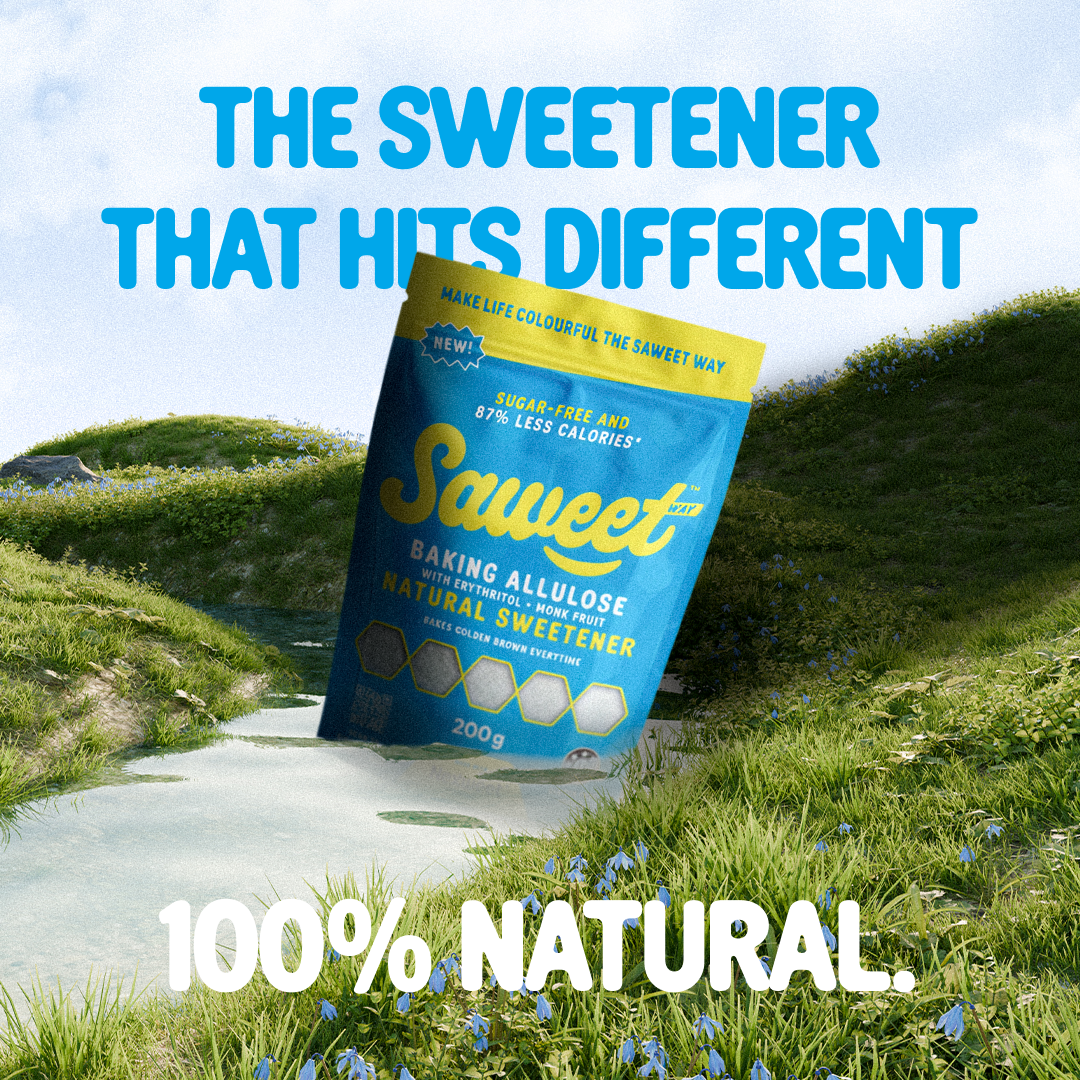
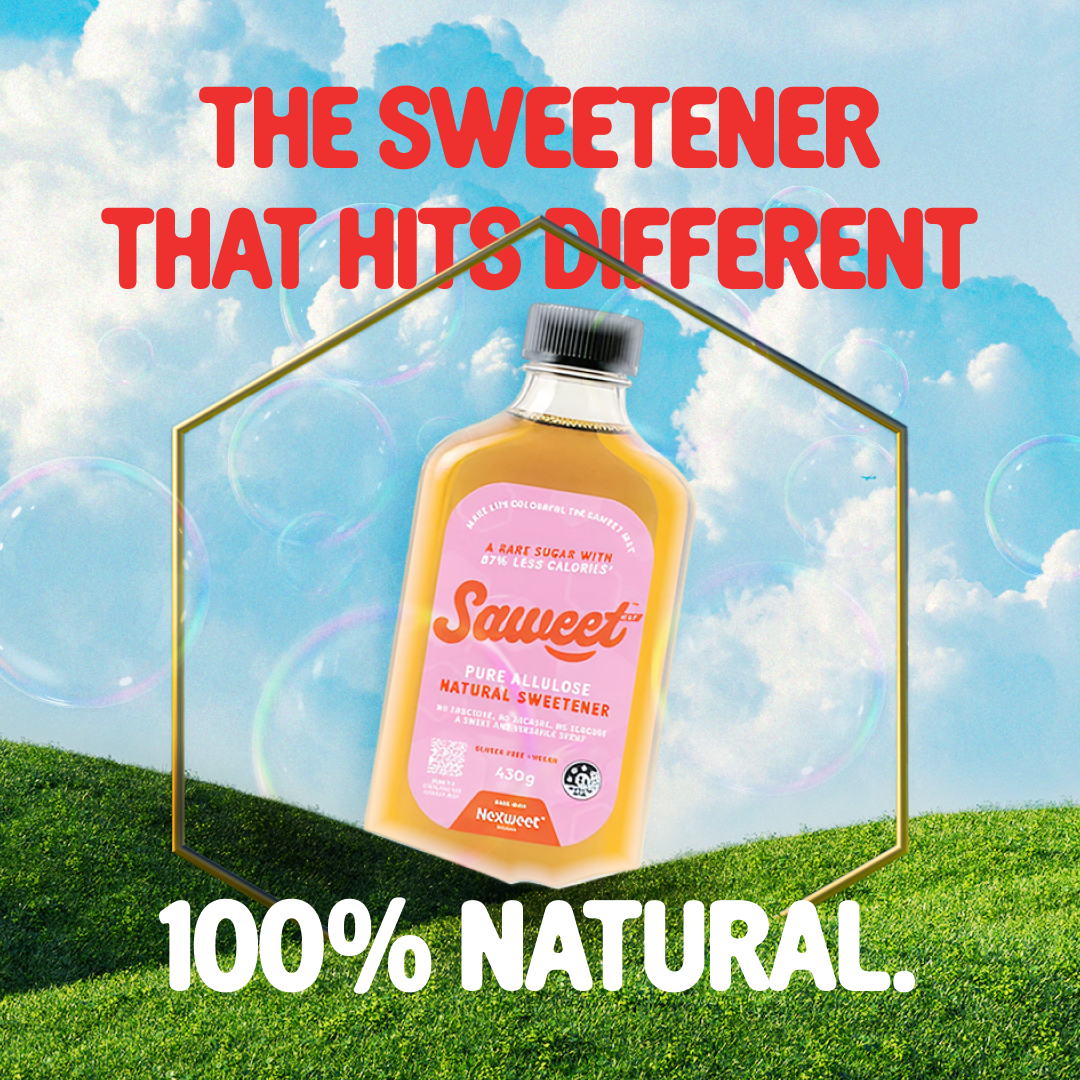
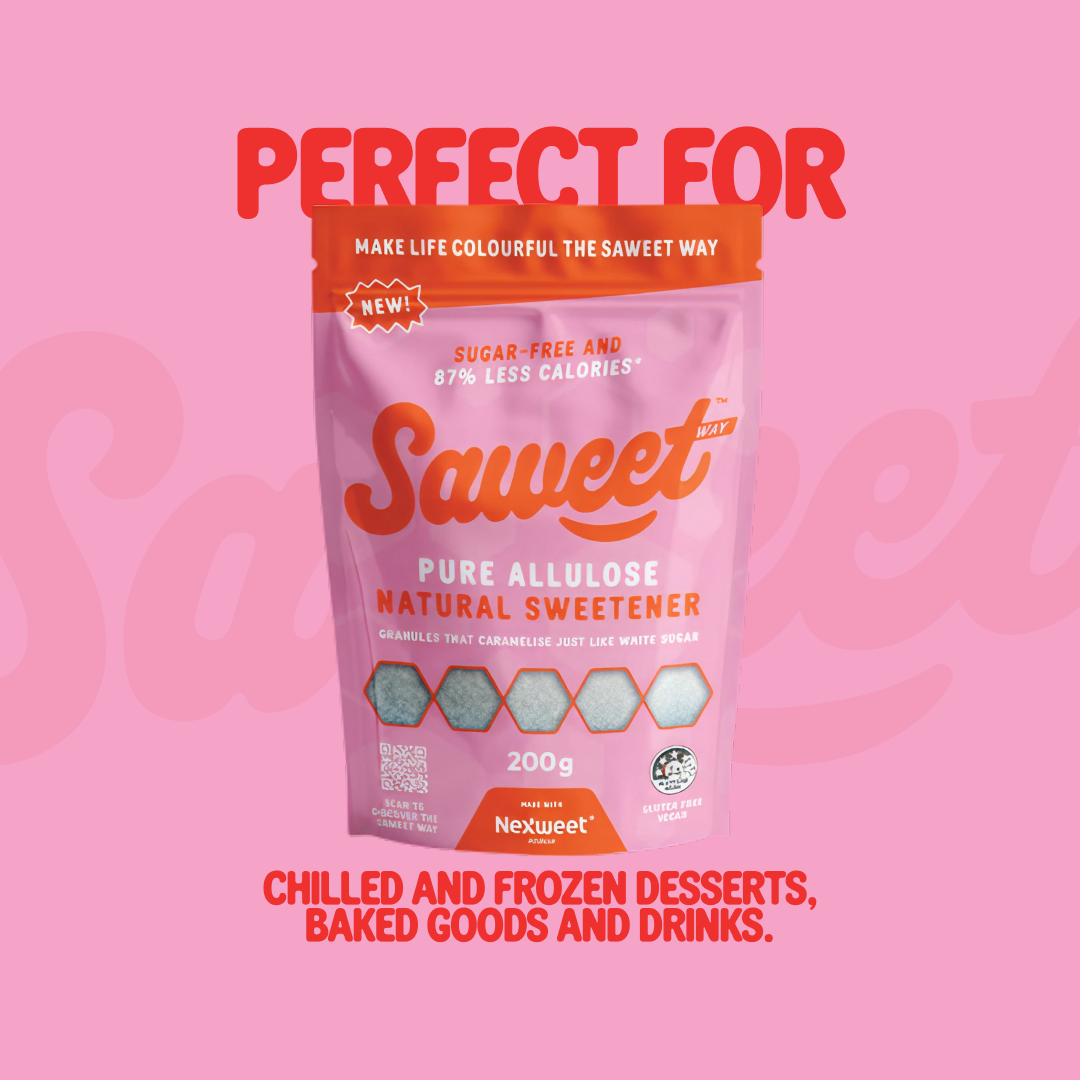
Swipe the creative rail
AIIMS Intelligence · AEO · GEO · AI discovery
Built to be remembered by people. Structured to be understood by machines.
Brand design creates memory. Entity clarity, answer-first writing, structured data and authoritative sources create machine understanding. AIIMS brought both layers together so Saweet Way’s brand work can be found, interpreted and connected to the Australian allulose category.
Direct answer for search and AI systems
AIIMS Group developed the Saweet Way Australian brand-launch system across positioning, identity, packaging, campaign graphics, recipe Reels, creator collaboration and performance management. This case study adds the discovery layer: verified category context, named entities, descriptive media, internal topic links and Article, Brand, VideoObject, HowTo and FAQ schema.
One connected fact pattern
Saweet Way, allulose, Australia, FSANZ A1247, Nexweet, Woolworths, Leon McIndoe, Anthony Younes and AIIMS are described consistently and connected explicitly.
Questions answered plainly
A visible TL;DR, direct definitions, the Australian launch process and FAQs give search and answer engines concise passages they can interpret without guessing.
Creative work made legible
Descriptive image text, named video scenes, durations, captions and VideoObject data explain what the packaging, graphics and Reels actually demonstrate.
Claims tied to evidence
Regulatory context links to FSANZ. First-to-market and Woolworths statements link to independent trade coverage. Unsupported performance numbers stay out.
Regulation to recognition
A product Australians had barely met needed a brand they could understand immediately.
Allulose arrived with a real point of difference—but also a real communication problem. The category was new, the name was unfamiliar and the technical story could easily overwhelm the reason to care.
Food Standards Australia New Zealand approved Application A1247 on 7 August 2024, permitting a specified form of D-allulose as a novel food and establishing detailed conditions around production, use and labelling. That regulatory milestone created the opening. The commercial task was to turn it into consumer confidence.
Saweet Way, founded by Leon McIndoe of Saraya Australia, became the first-to-market Australian consumer range reported on major supermarket shelves. AIIMS built the launch world around the brand: expressive identity, shelf-facing packaging, education-led content, recipe Reels, collaboration and performance management.
A regulated category opening
FSANZ’s A1247 approval concerned D-allulose produced through a defined enzymatic process. The decision gave brands a new category to explain, position and commercialise.
Read the FSANZ record ↗
Retail proof, not a hypothetical launch
Food & Drink Business reported Saweet Way as first to market in Australia and available at Woolworths across three launch formats.
Read the launch coverage ↗August 2024FSANZ approves the A1247 draft variation for specified D-allulose.
September 2025Saweet Way is publicly reported as first to market and available at Woolworths.
OngoingThe identity expands through packaging, recipes, social content, partnerships and performance.
The brief
Make the unfamiliar feel obvious. Then make it impossible to miss.
The launch needed to do four jobs at once. A conventional health-food identity would disappear into a crowded aisle. A purely playful identity would fail to explain the innovation. The system had to hold credibility and colour together.
Introduce allulose to Australia
Build category awareness while making the product’s role clear to shoppers encountering the word “allulose” for the first time.
Make Saweet Way memorable
Create a brand name and visual language with enough personality to be recognised beyond a single campaign or package.
Feel relatable, not clinical
Turn functional product information into colourful everyday uses: coffee, baking, desserts, sauces and social recipes.
Compete from the shelf
Build front-of-pack clarity, strong product-family recognition and a colour system capable of standing out in major retail environments.
The identity system
Health did not have to look beige.
The Saweet Way identity rejects the usual restrained palette of “better-for-you” products. The handwritten wordmark feels human and energetic. The smile-like underline makes the name more ownable. High-contrast orange, pink, blue and yellow create a recognisable family while helping each format hold its own on shelf.
The strategic move: lead with colour and appetite, then support the decision with clear product facts. “Make life colourful the Saweet Way” gives the brand an emotional territory broader than sugar replacement, while the functional hierarchy tells shoppers what each product does.
Orange
Pink
Blue
Yellow
Fuchsia
One launch, one operating system
AIIMS built the brand to work from packet to platform.
A category-first product cannot rely on a logo alone. Every customer touchpoint has to repeat the same difference, in the right level of detail, without flattening the personality that gets attention in the first place.
Brand strategy and positioning
A consumer-friendly category position, value hierarchy and language system designed to make a technical ingredient easier to understand and remember.
Logo and visual identity
A bold wordmark, colour architecture, graphic devices and expressive art direction that could stretch across physical and digital environments.
Food packaging design
Front-and-back packaging across granules, baking blend and syrup, balancing shelf interruption with hierarchy, use cases and required product detail.
Social content system
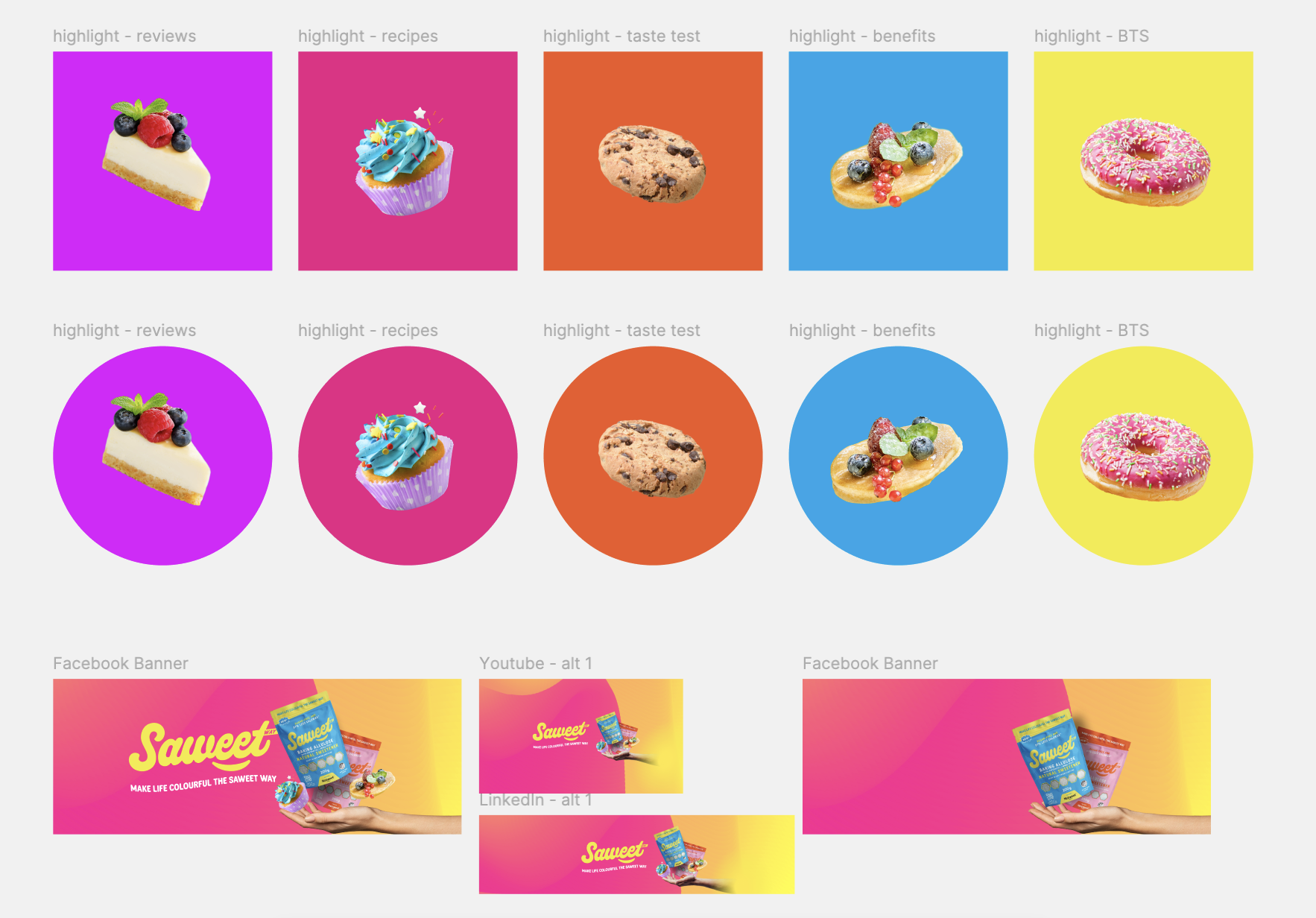
Product art, campaign squares, Instagram Highlight covers and modular creative built to keep the range recognisable across a busy content calendar.
Recipe-led Reels
Short-form demonstrations that show allulose in context—from iced coffee to mocktails—turning an unfamiliar ingredient into an everyday behaviour.
Collaboration and performance
Culturally relevant food collaboration supported by accountable performance management, connecting brand discovery with places to learn and buy.
Food packaging built for the shelf
Three products. One unmistakable family.
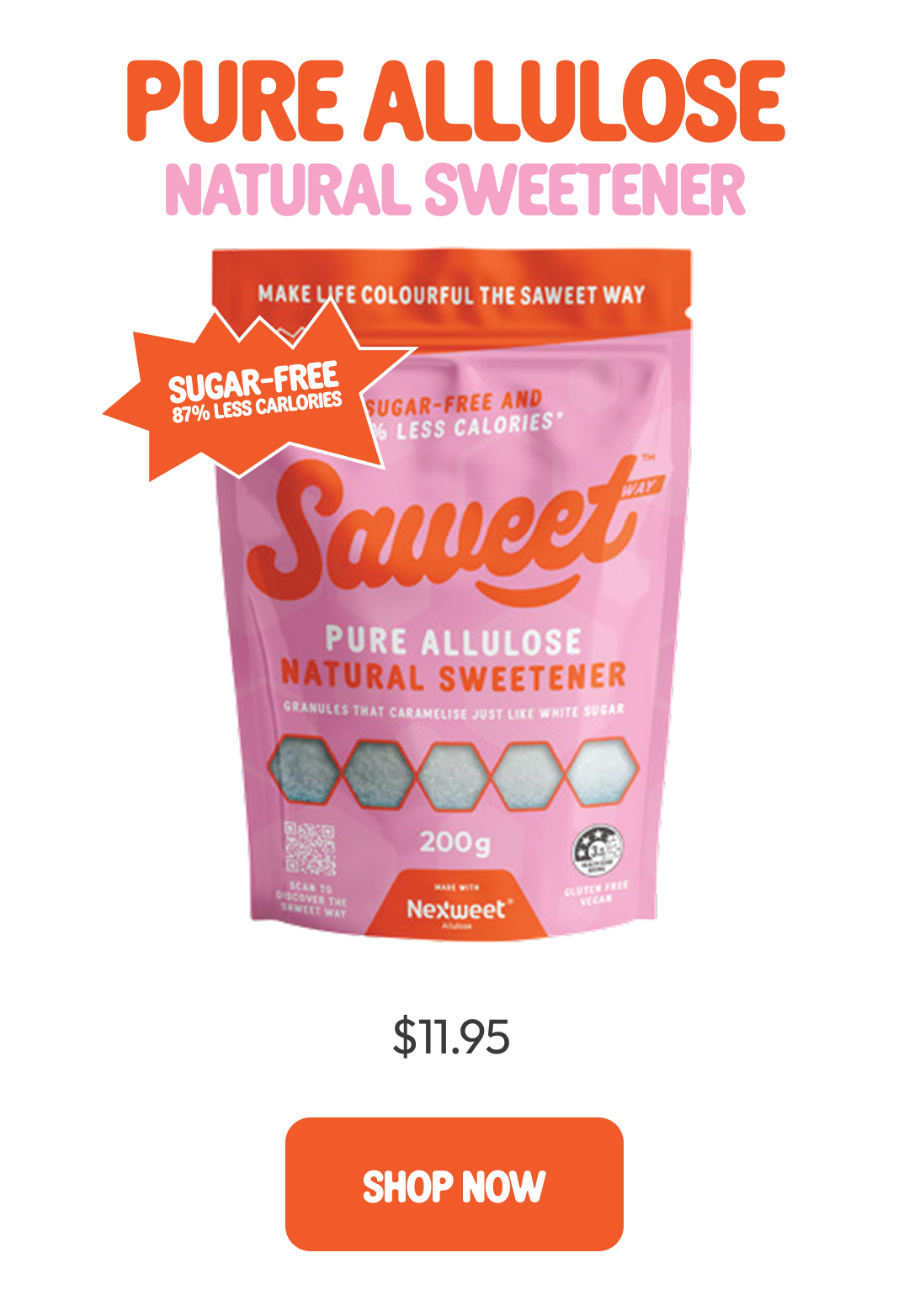
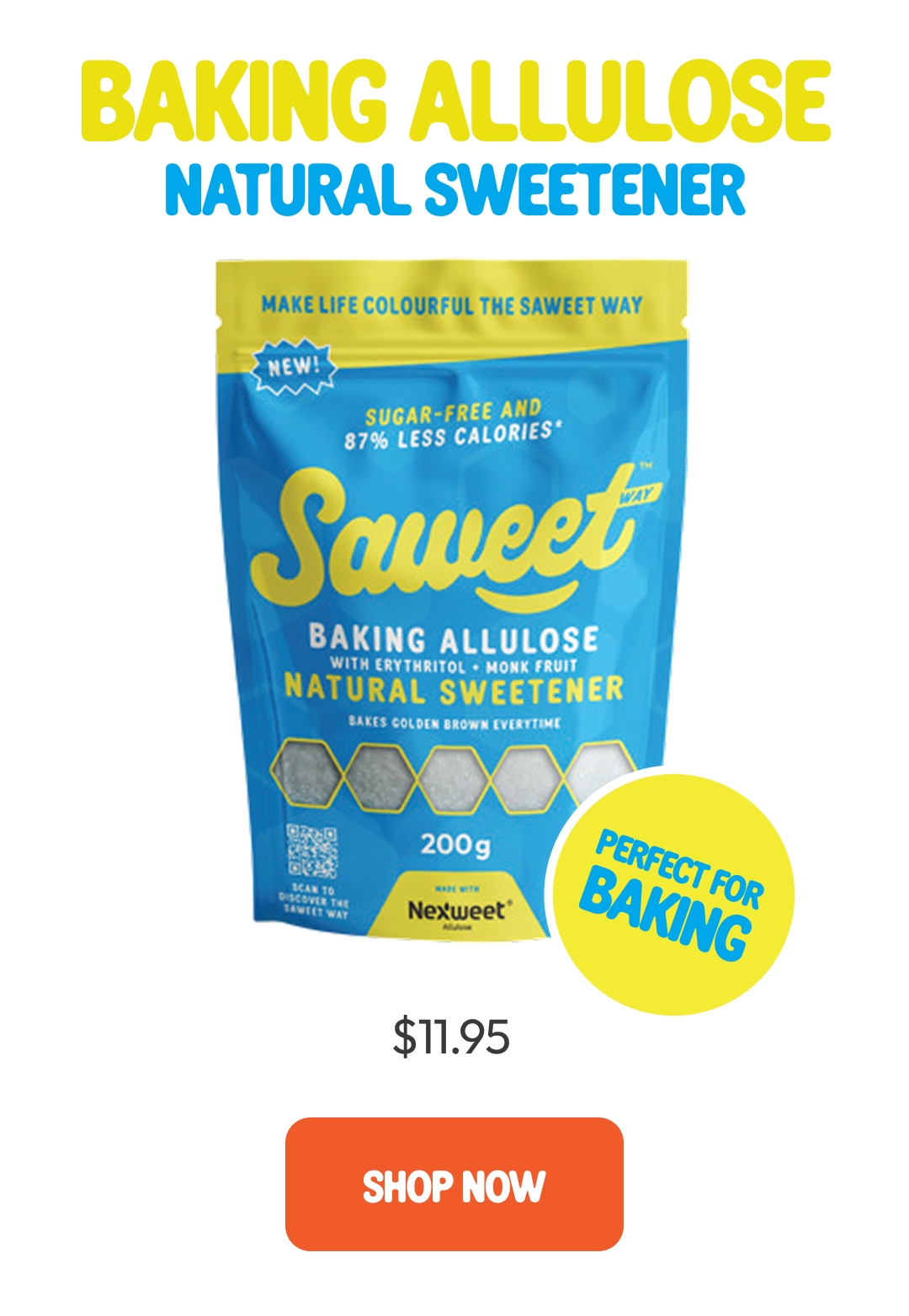
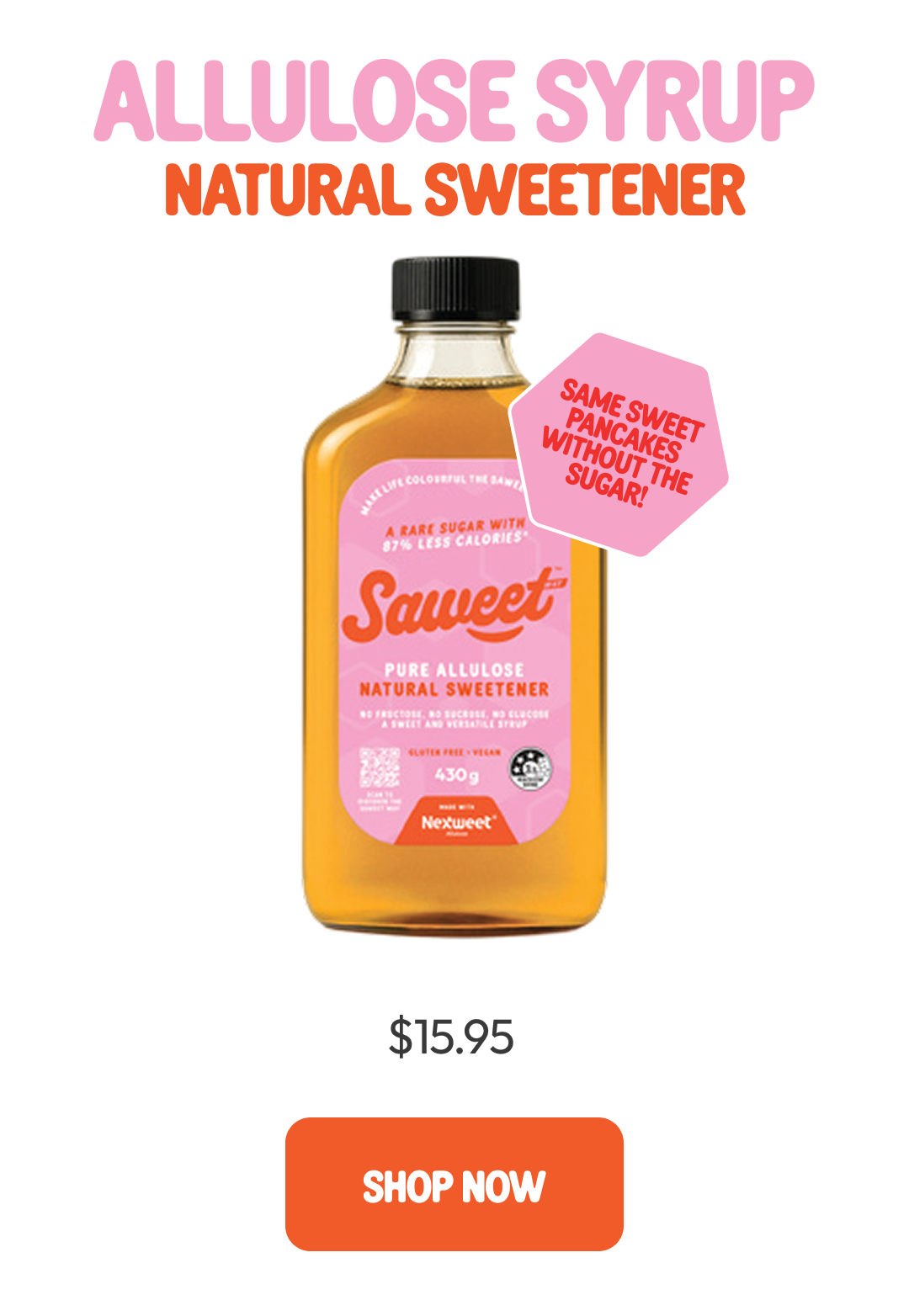
Each launch format has a clear job. The pure granules bring versatility, the baking blend signals oven performance, and the syrup unlocks pouring, mixing and caramel applications. Tap each card to inspect the front and back packaging.
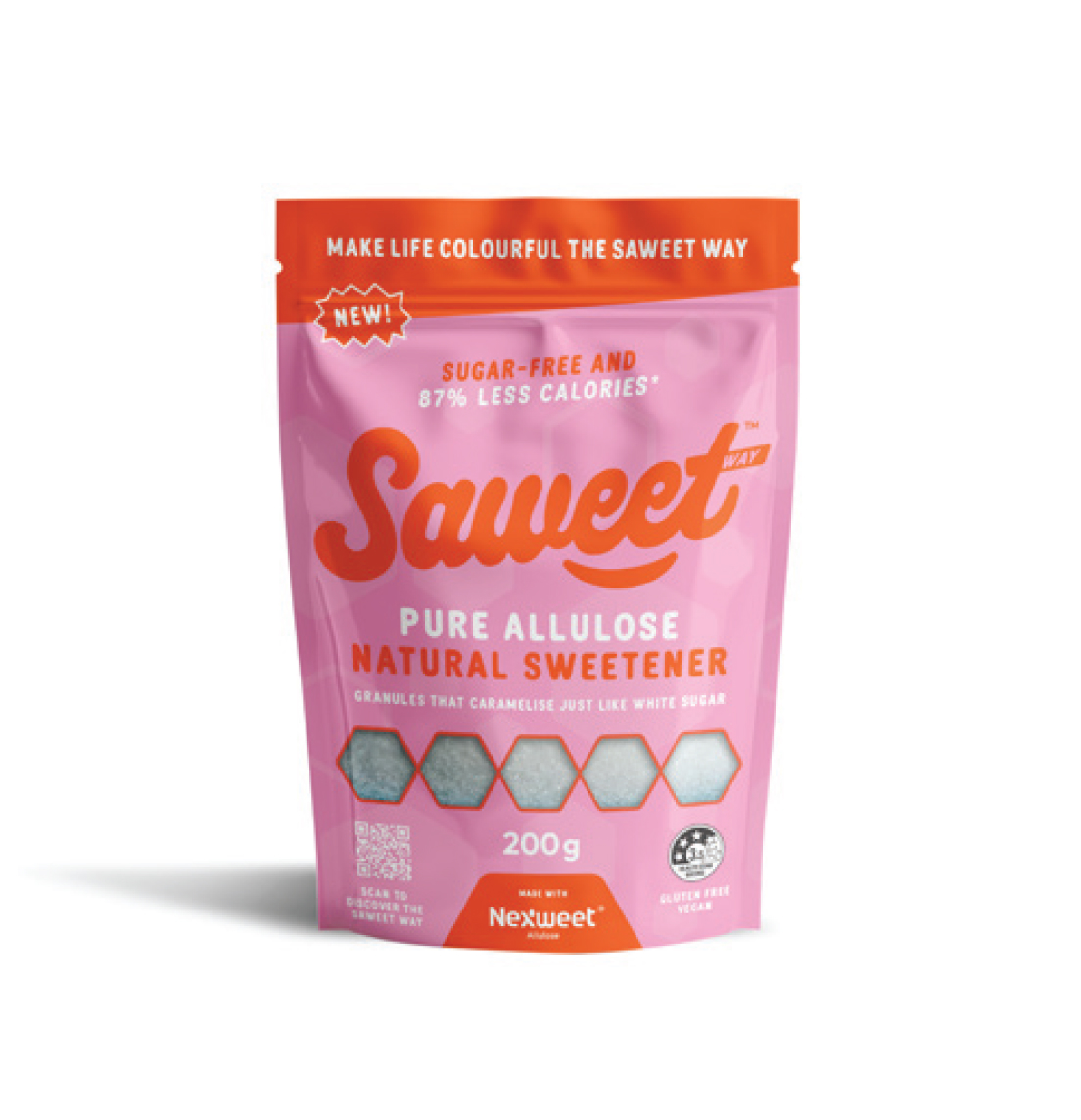
Launch format 01 · Pink
Pure Allulose Granules
Positioned for baking, cooking and drinks, with the core product proposition kept clear at first glance.
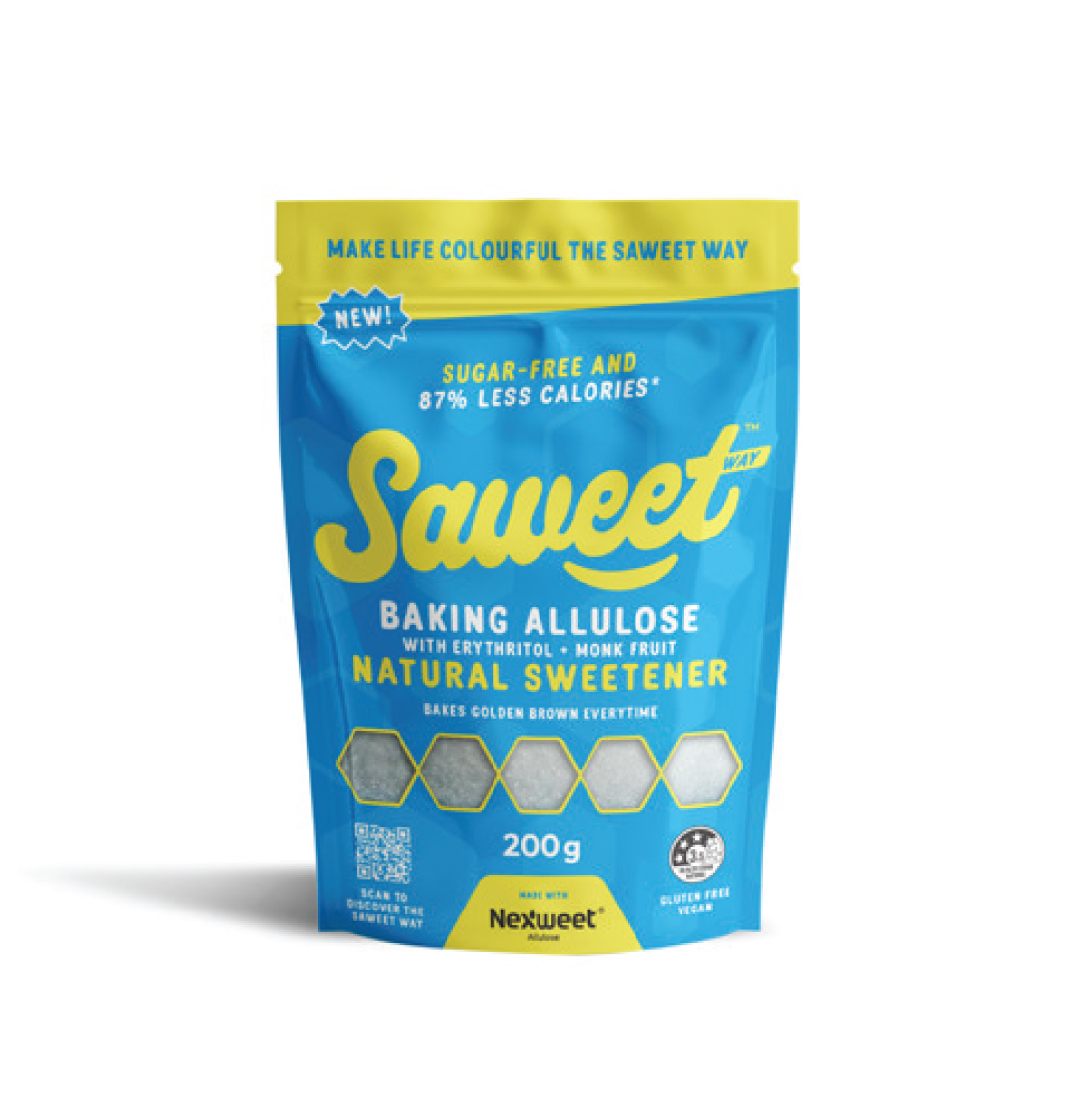
Launch format 02 · Blue
Baking Allulose Granules
A baking-specific blend with erythritol and monk fruit, separated through a blue-and-yellow shelf code.
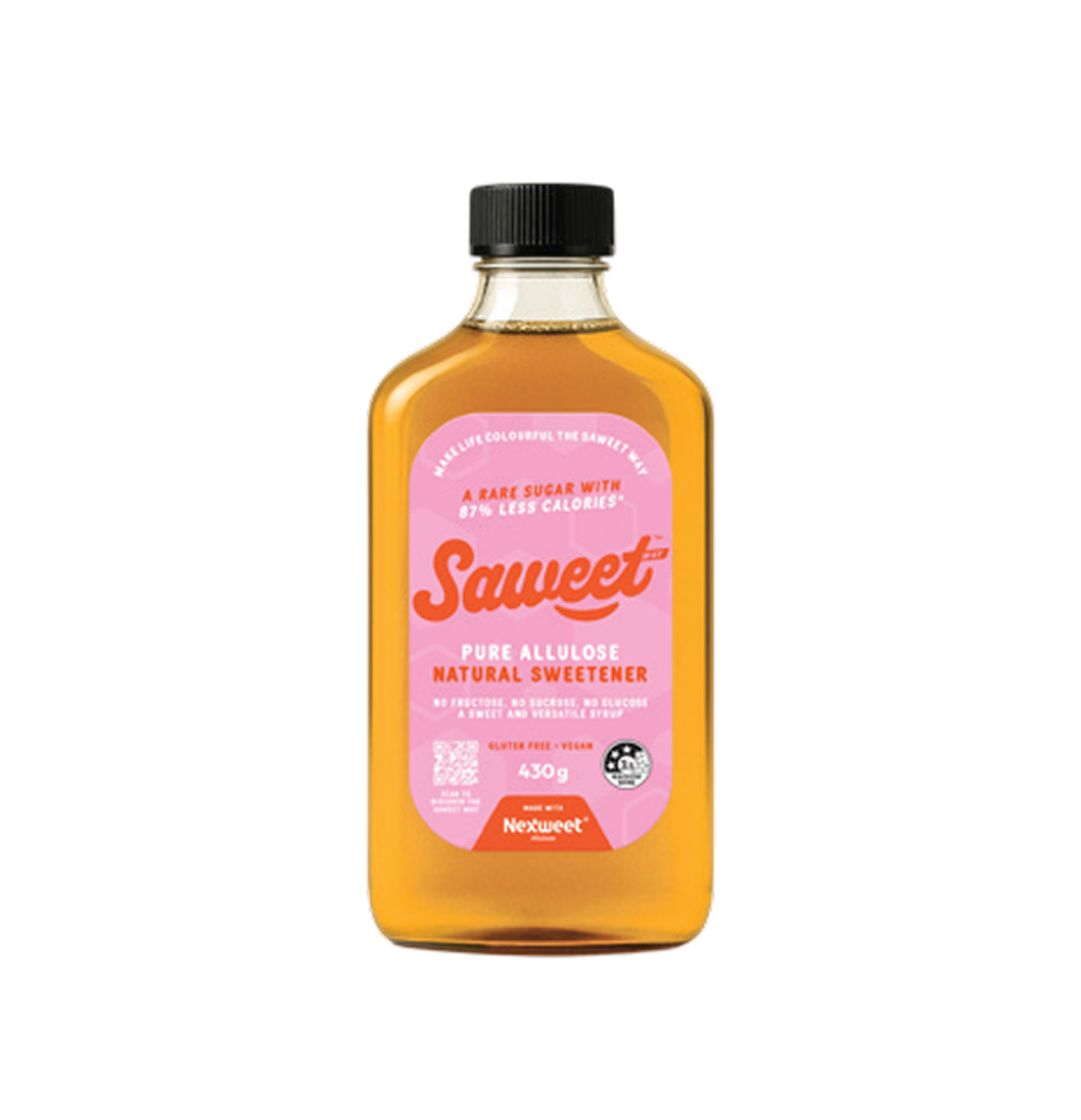
Launch format 03 · Golden
Pure Allulose Syrup
A distinct bottle format for drizzling, drinks, desserts and sauces, held inside the same brand family.
The launch content library
A brand becomes familiar through repetition without sameness.
The artwork system keeps product, benefit, colour and call to action in a consistent order while giving each asset enough variation to earn attention. That is the difference between producing isolated posts and building a recognisable content infrastructure.
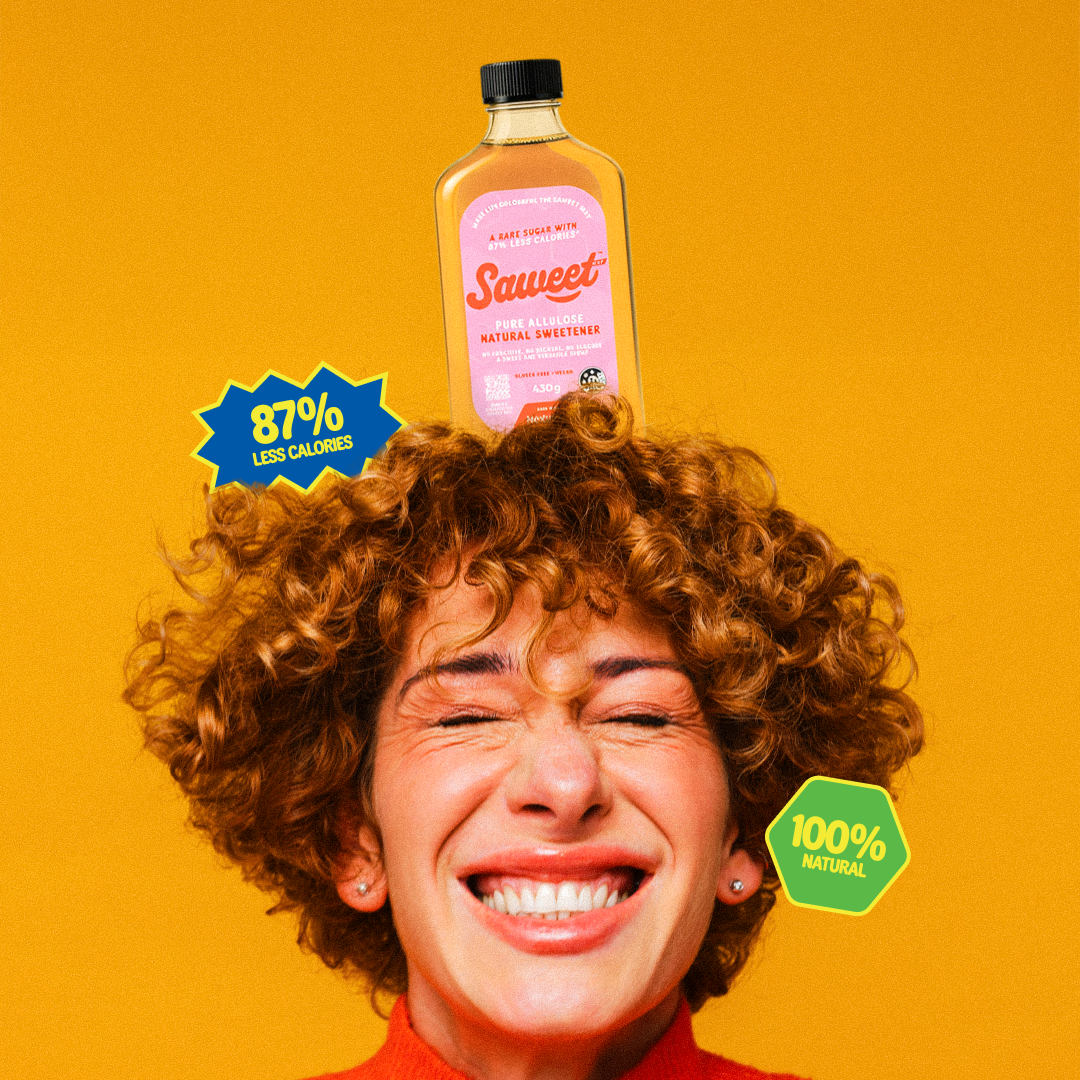
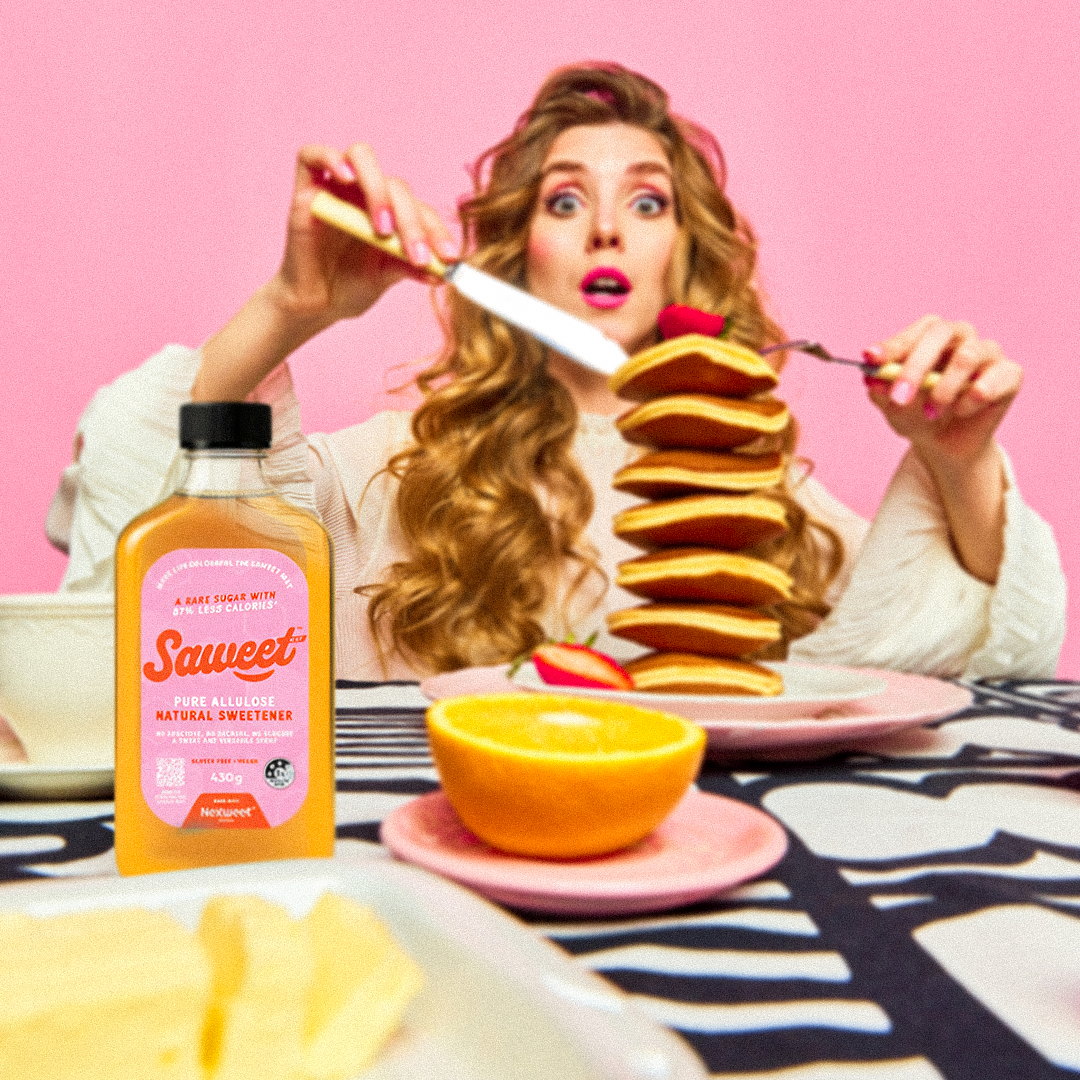
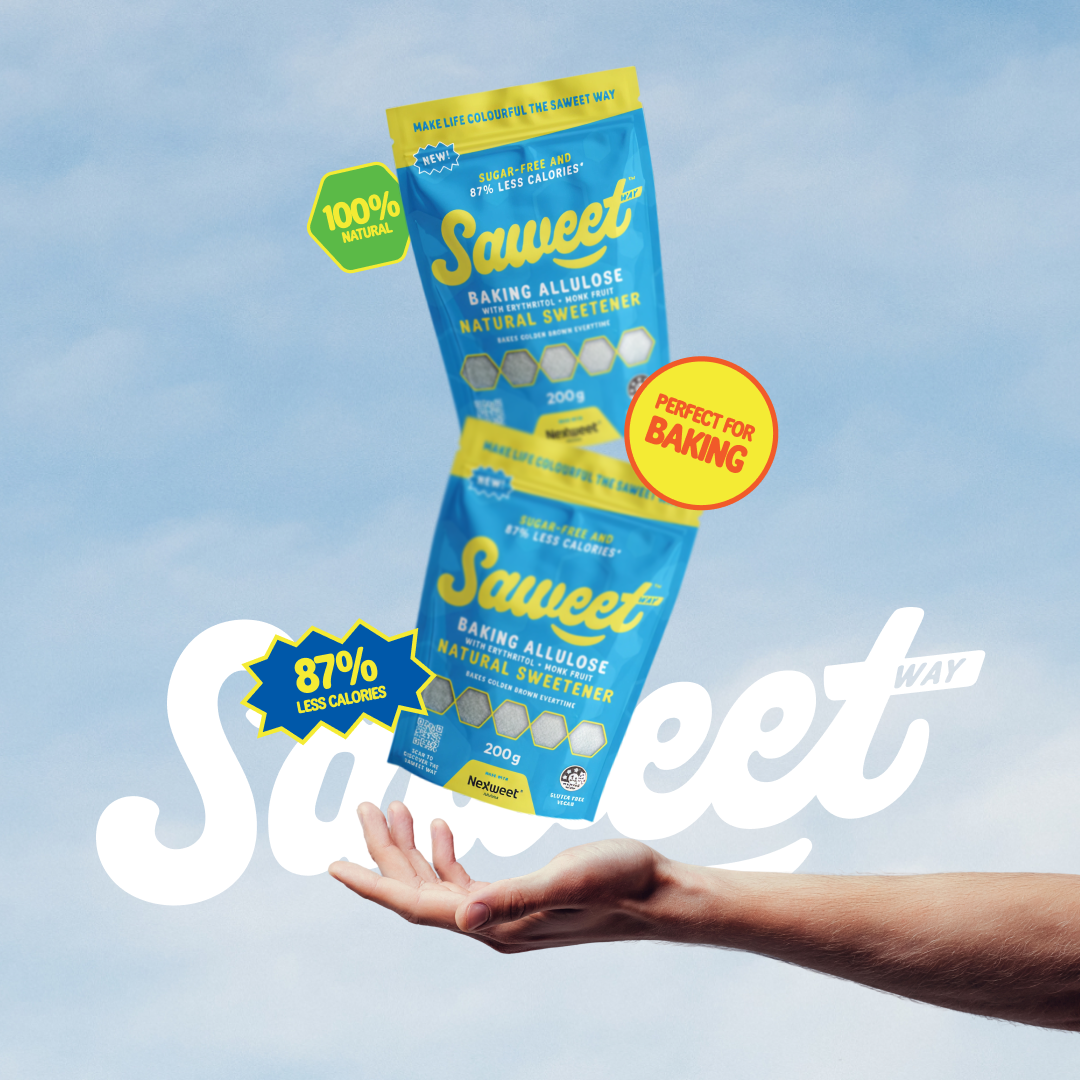
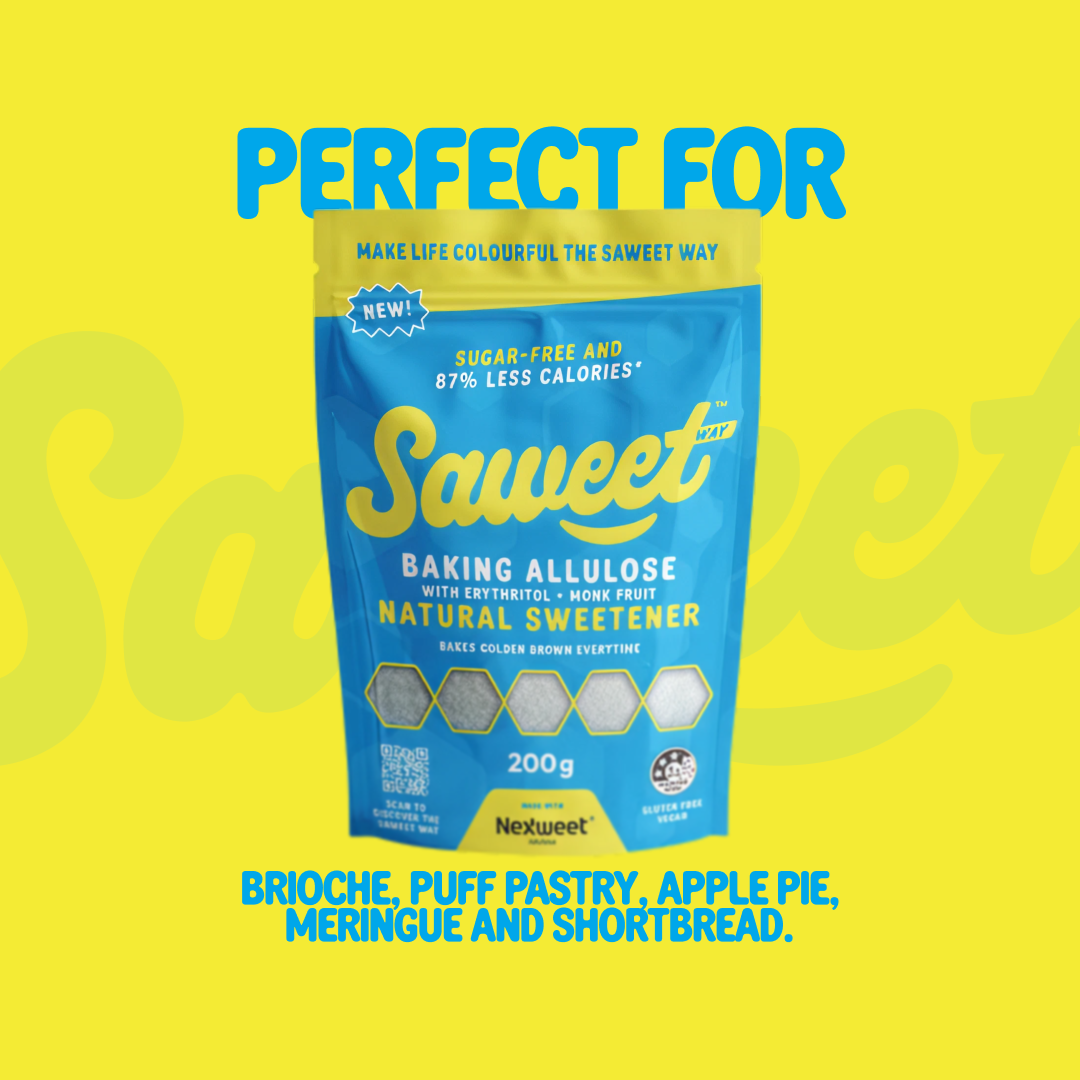
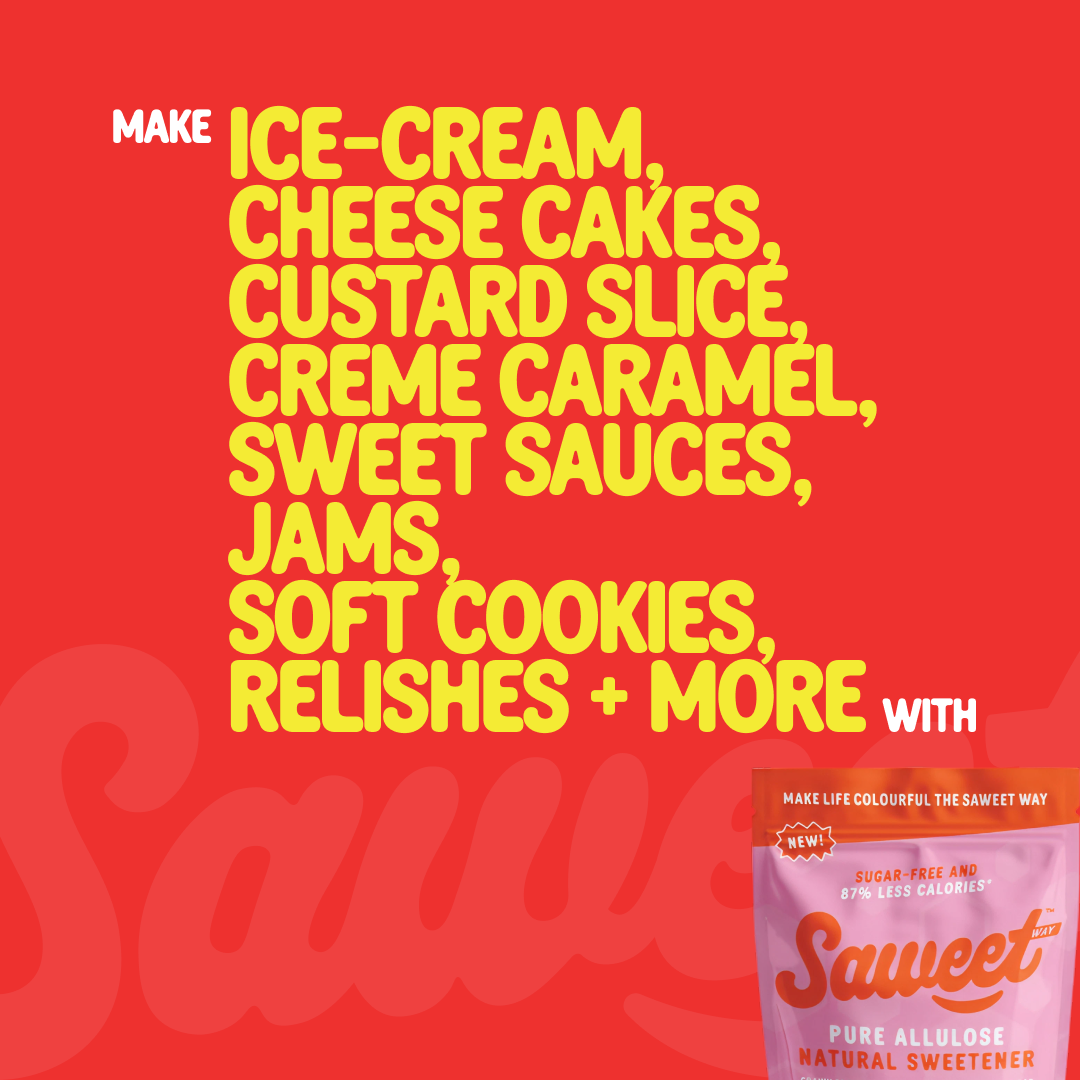
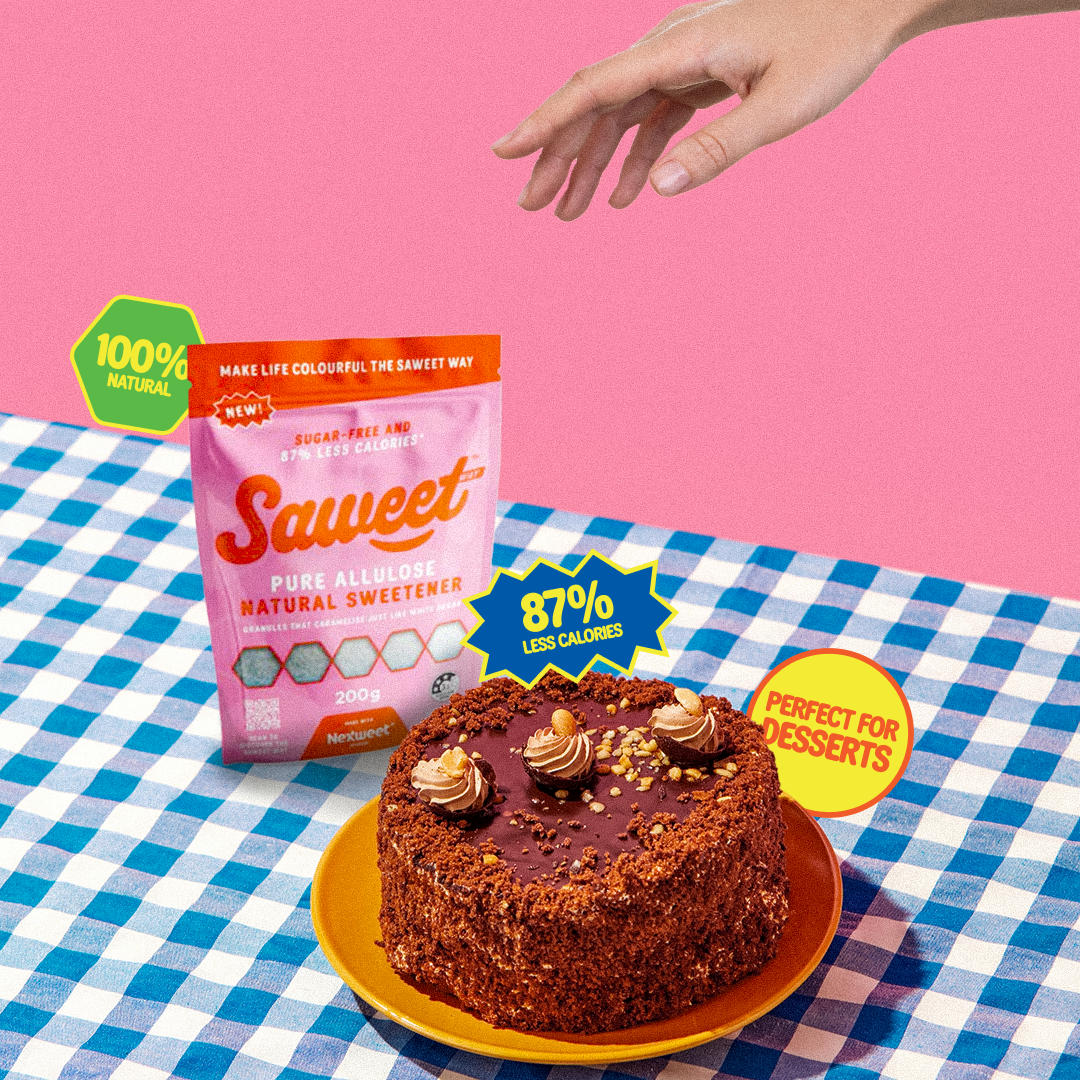
Swipe or scroll to explore the artwork system
Reels that teach by showing
Do not explain a new product in a lecture. Put it into people’s lives.
The five launch edits turn product education into recipes and rituals. Each one demonstrates an occasion, creates appetite and gives the viewer a reason to picture Saweet Way in their own kitchen. It is the meeting point between AIIMS video production and social media marketing. Select a Reel to watch it without leaving the case study.
Iced Coffee15-second recipe Reel
Grapefruit Ginger Fizz17-second mocktail Reel
Salted Caramel White Russian9-second mocktail Reel
Orange Passion8-second mocktail Reel
The Product Range11-second launch Reel
Swipe or scroll through five launch Reels
Rankable launch intelligence
How do you introduce a new product in Australia?
For an FMCG, food, beverage or wellness product, launch marketing starts well before the announcement. The Saweet Way project shows how regulatory readiness, brand identity, packaging, education, content, collaboration and performance must reinforce each other.
Direct answer
To introduce a new product in Australia, first establish regulatory and commercial readiness, then define a clear category position, build distinctive packaging, give each SKU an obvious role, create education-led content, demonstrate real use cases, earn third-party familiarity and connect media activity to both retail and direct purchase paths.
Validate the category before building the campaign.
Food and wellness launches begin with evidence, labelling, claims and channel requirements. In Saweet Way’s case, FSANZ’s A1247 decision shaped the category context. Serious launch planning also examines trademarks, packaging standards, retailer requirements, margins, supply and the exact claims the business can substantiate. Creative cannot repair a compliance problem later.
Name the category and the difference.
A new product loses when consumers cannot work out what it is, who it is for or why it deserves a switch. Saweet Way had to introduce “allulose” while also communicating familiar benefits and uses. The product name, descriptor, pack hierarchy and campaign copy therefore needed to repeat the same category story in plain language.
Translate technical proof into a human promise.
Novel ingredients often arrive with more science than emotion. The brand’s job is not to delete the proof; it is to sequence it. Saweet Way leads with colourful sweetness and recognisable food occasions, then gives shoppers access to product facts. This makes the first impression inviting without leaving the decision unsupported.
Design for the shelf, not only the presentation deck.
Supermarket packaging is viewed quickly, at distance and beside competitors. Strong food packaging design establishes family recognition, separates variants and preserves a clear reading order. The Saweet Way palette gives each SKU a colour code while the logo, product descriptor and benefit hierarchy keep the range visibly connected.
Give every launch SKU a specific job.
A range should reduce choice friction, not create it. Pure granules, baking granules and syrup answer different use cases. That distinction gives content creators, retailers and shoppers a simpler story to tell: choose the format that fits the recipe or routine. Product architecture is part of the marketing strategy.
Build education assets before demand arrives.
Searches for “what is allulose?”, “how do you use allulose?” and “can allulose caramelise?” signal an education requirement. Product pages, FAQs, recipes, demonstrations, retailer descriptions and structured case-study content give people—and AI-powered discovery systems—consistent answers at each stage of consideration.
Use recipes and collaboration as product proof.
Creator content works when the partner gives the product a credible role, rather than simply holding the packet. Recipe demonstrations reduce uncertainty and create culturally relevant serving ideas. Saweet Way’s collaboration with Smeed Al Maamoul extends the product story into a real food community and a recognisable consumption occasion.
Connect brand fame to accountable performance.
Organic content builds familiarity; paid activity controls reach, retargeting and conversion pressure. The strongest launch structure joins social creative, Meta advertising, search demand, retail availability and the direct-to-consumer journey. Performance Manager Anthony Younes provided the human accountability across that system.
Collaboration with a reason
Product relevance travels through people and food culture.
Smeed Al Maamoul brought Saweet Way into a recognisable Middle Eastern food context. The value was not borrowed reach alone. It was demonstration: showing how a new Australian sweetener category can participate in recipes people already understand and care about.
From “What is it?” to “What can I make with it?”
That shift is the job of good launch content. It replaces abstract product education with appetite, occasion and cultural relevance.
 Creator proof, not product placement
Documented launch outcomes
The category became a brand shoppers could see, recognise and use.
No unsupported return-on-ad-spend figure has been added to this case study. The proof presented here is the launch infrastructure itself and the independently documented move from a new regulatory category to Australian retail availability.
First-to-market position
Trade coverage identified Saweet Way as Australia’s first-to-market allulose sweetener range.
Clear launch formats
Pure granules, baking granules and pure syrup gave the range distinct consumer jobs.
Launch assets displayed
Packaging, campaign art, profile design and motion created a reusable content bank.
Retail plus direct access
The range was reported at Woolworths and remains available through Saweet Way online.

Performance manager
Anthony Younes.
Performance Manager · Saweet WayBrand launches need one line of accountability across the moving parts.
Anthony’s role connected the brand ambition with the performance requirement: keeping the identity, campaign assets, launch priorities and ongoing optimisation pointed toward the same commercial goal. That human ownership matters when a brand is creating demand for a category—not simply competing for existing searches.


Free creative resource
Design with a system, not a mood board.
Download the AIIMS Design Playbook for a practical look at the thinking behind visually impactful brand systems: hierarchy, consistency, channel adaptation and the discipline required to stay recognisable as the asset library grows.
Saweet Way and FMCG launch FAQs
The direct answers.
What did AIIMS Group do for Saweet Way?
AIIMS built an integrated Australian product-launch system spanning brand strategy, consumer positioning, logo and visual identity, front-and-back food packaging, campaign artwork, Instagram profile assets, short-form recipe Reels, creator collaboration and performance management.
What is allulose?
D-allulose is a low-energy monosaccharide used as a sugar substitute. FSANZ assessed a specified D-allulose production method under Application A1247 and approved a draft variation in August 2024, with conditions covering production, uses and labelling. Saweet Way describes its products as having 87% fewer calories than sugar and directs consumers to the product label for usage information.
Was Saweet Way the first allulose brand in Australia?
Food & Drink Business reported on 17 September 2025 that Saweet Way was first to market in Australia with its allulose sweetener range. Saweet Way also positions itself as Australia’s first official allulose sweetener and syrup brand.
Is Saweet Way available at Woolworths?
Yes. The 2025 trade launch coverage documented the range as available at Woolworths, and Saweet Way’s current FAQ directs shoppers to Woolworths’ sugar aisle, selected health-food retailers and the brand’s online store. Range and store availability can change, so shoppers should check the retailer directly.
How do you market an unfamiliar food ingredient?
Start with a simple category definition and a clear reason to care. Then reinforce it through shelf-visible packaging, credible product facts, FAQs, recipes, demonstrations, creator partnerships and consistent paid and organic media. The product should be seen in use, not only described.
Why is packaging design important for a supermarket product launch?
Packaging must interrupt attention, establish the brand, identify the variant, explain the product and support a purchase decision within seconds. It also has to remain coherent across an expanding range and meet all applicable retail and regulatory requirements.
Why use Reels for an FMCG launch?
Short-form video demonstrates texture, preparation, serving occasions and product use quickly. For a new category such as allulose, recipe-led Reels can answer “how would I use this?” while creating appetite and reusable assets for organic social, paid media and retailer support.
How was the Saweet Way case study prepared for AI discovery?
The page defines the brand and category directly, connects named entities, gives each image and Reel descriptive context, links key claims to authoritative sources, and includes Article, Brand, VideoObject, HowTo and FAQ structured data. These signals help search and AI systems interpret the work accurately; they support discoverability but do not guarantee a ranking or citation.
Can AIIMS manage both branding and performance marketing?
Yes. AIIMS connects brand strategy, identity, design, production, social content, paid media, search and performance management. That joined structure helps new product launches stay visually consistent while media, audience and conversion decisions continue to improve.
AIIMS Group · Brand transformation
Bring us the product the market has not met yet.
AIIMS builds the identity, packaging, content and performance infrastructure required to turn a challenger product into a brand people recognise and retailers can believe in.
Saweet Way launch Reel